
Movement and Locomotion in Living Organisms
Introduction
Living organisms perform different activities to survive and carry out their daily functions. Some organisms move their body parts, while others move their entire bodies from one place to another. These activities are known as Movement and Locomotion. Although Movement and Locomotion are closely related, they do not have exactly the same meaning.
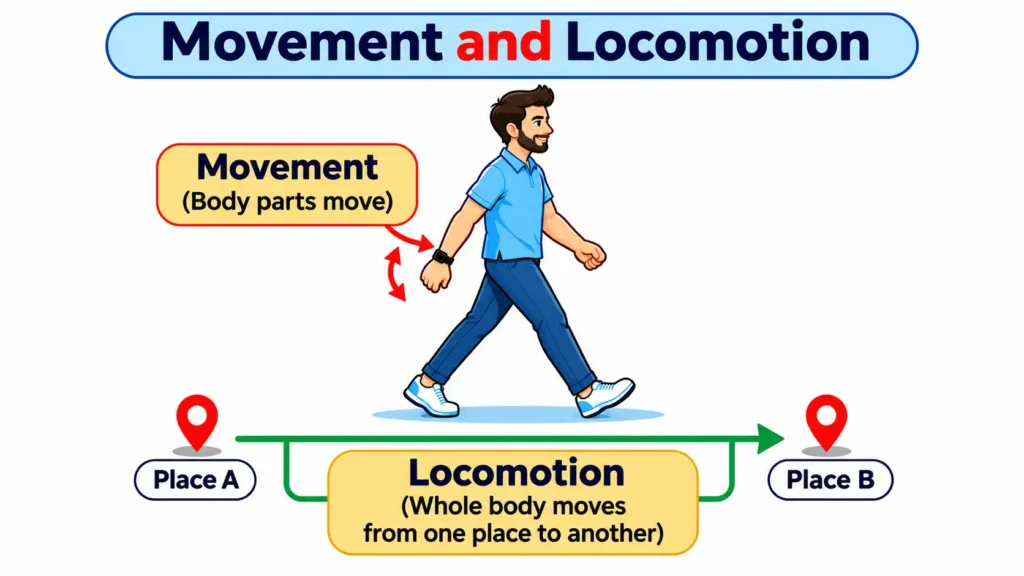
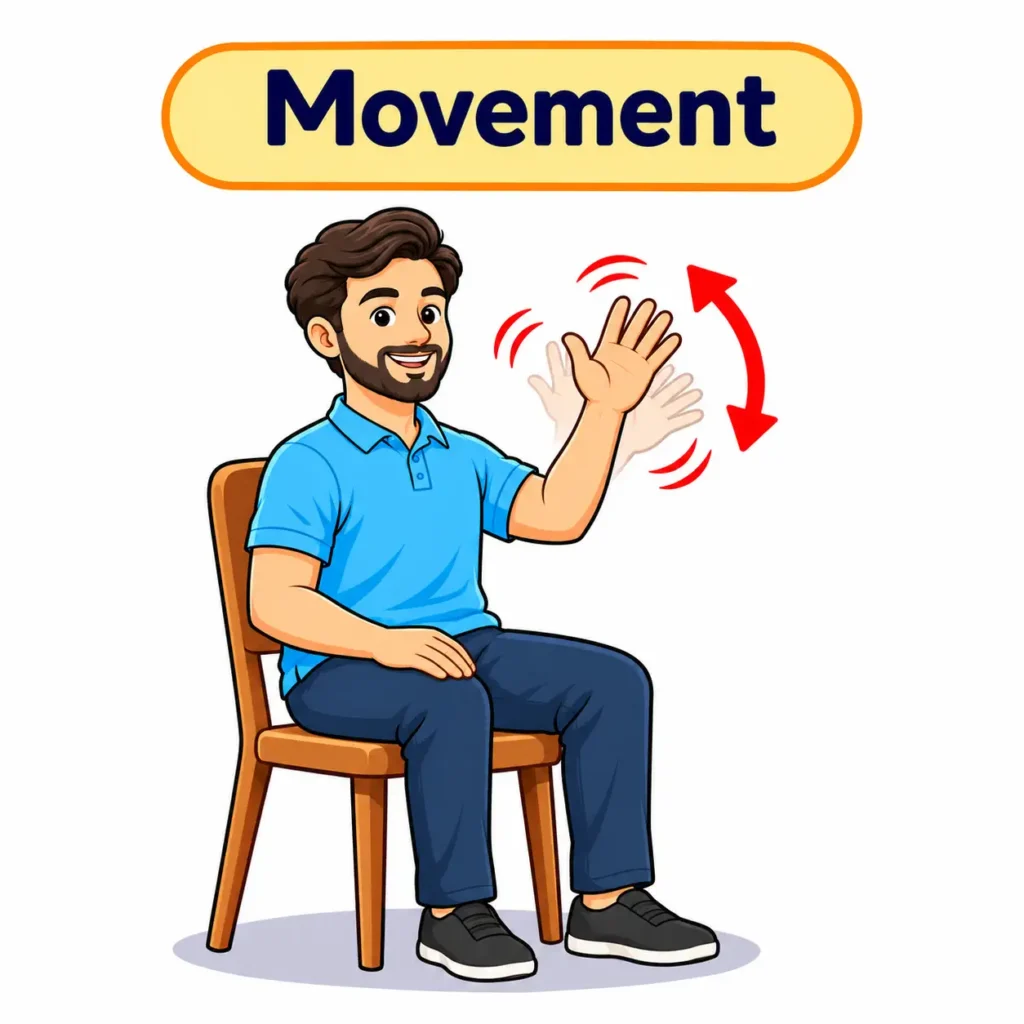
When you wave your hand while sitting on a chair, you are performing movement.
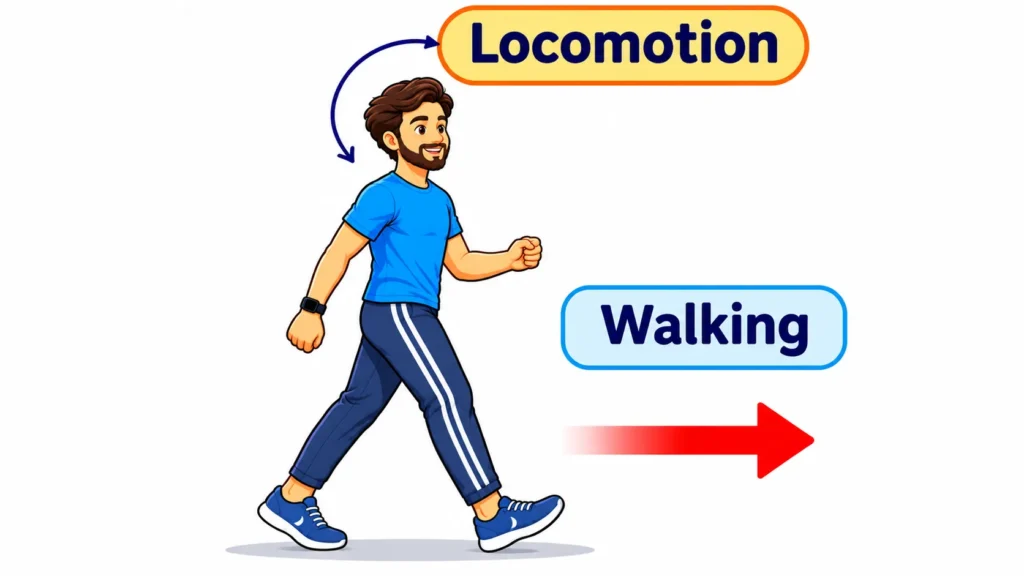
When you stand up and walk from one corner of the room to another, you are performing locomotion.
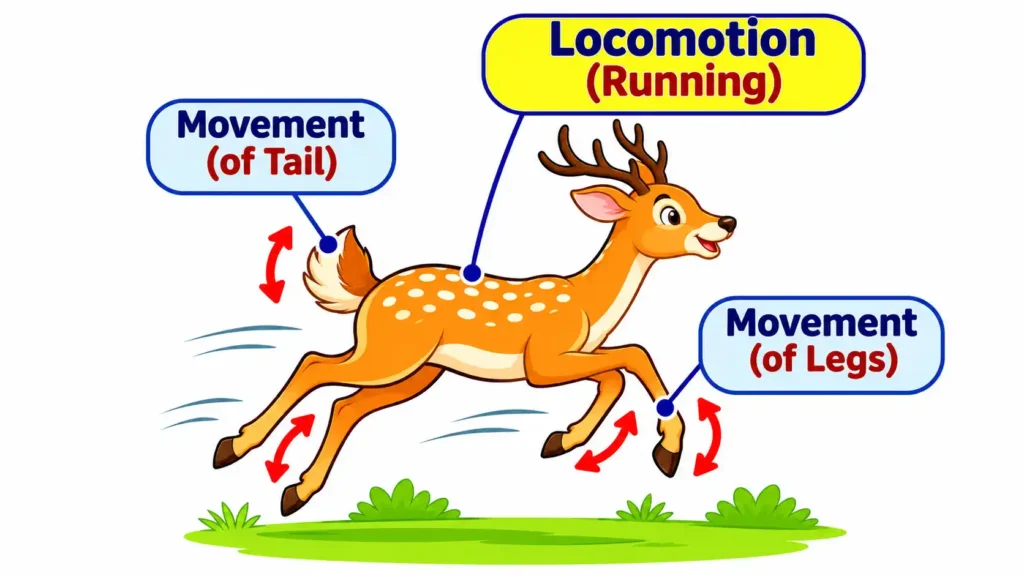
All locomotion is movement, but all movement is not locomotion.
1. What Is Movement?
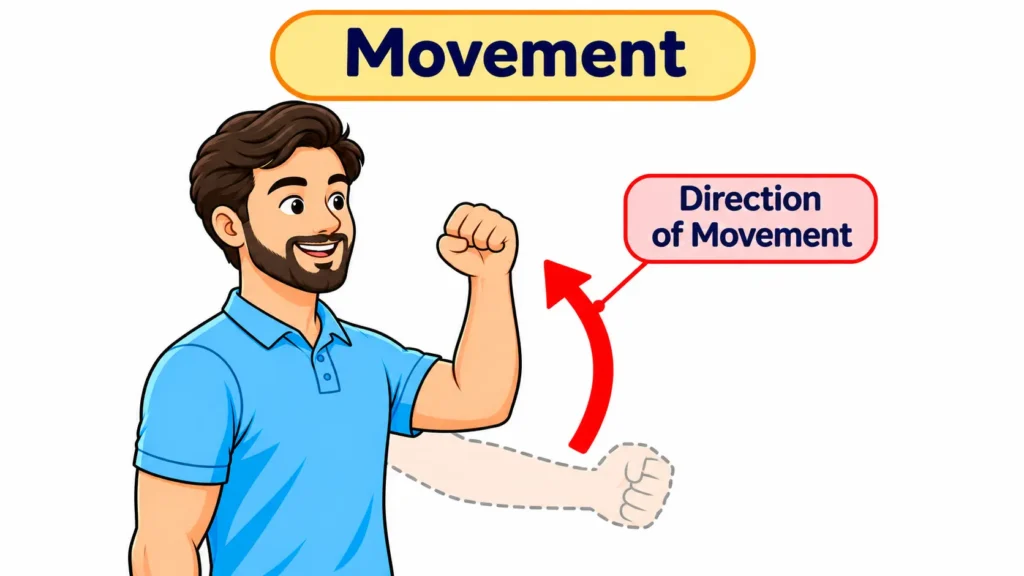
When any body part changes its position or direction, it is called movement. Movement does not always require an organism to change its location. A person can move their hands, legs, head or eyes while remaining in the same place.
Examples of Movement
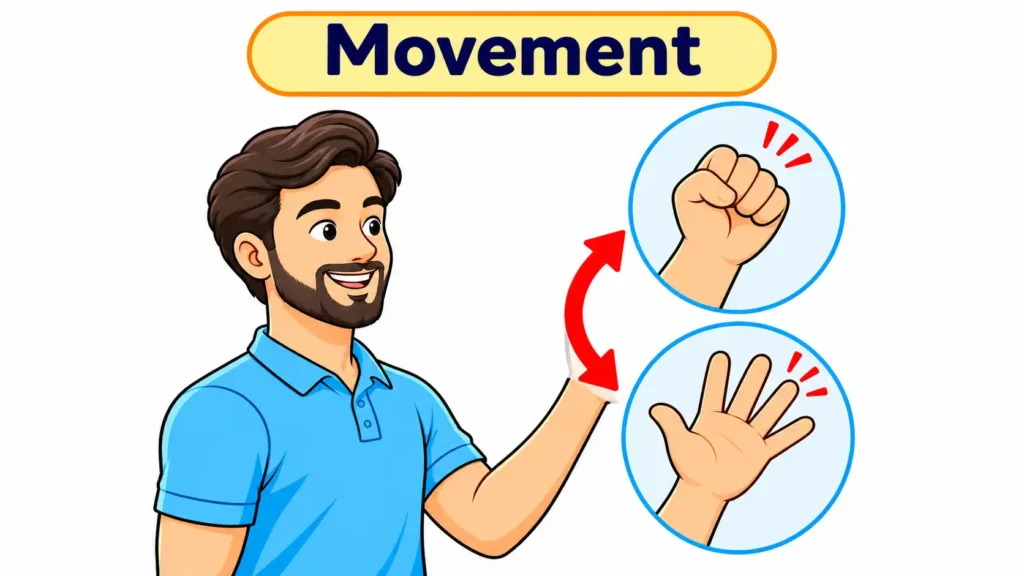
- Moving Hands: When you wave your hand to greet someone, it is an example of movement.
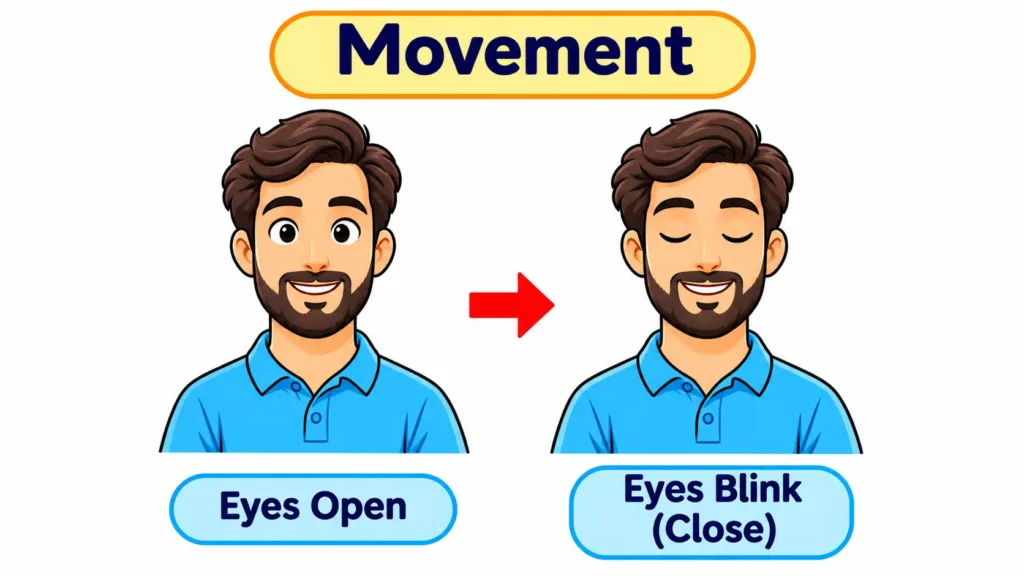
- Blinking Eyes: When you open and close your eyes, your eyelids move. This is also movement.
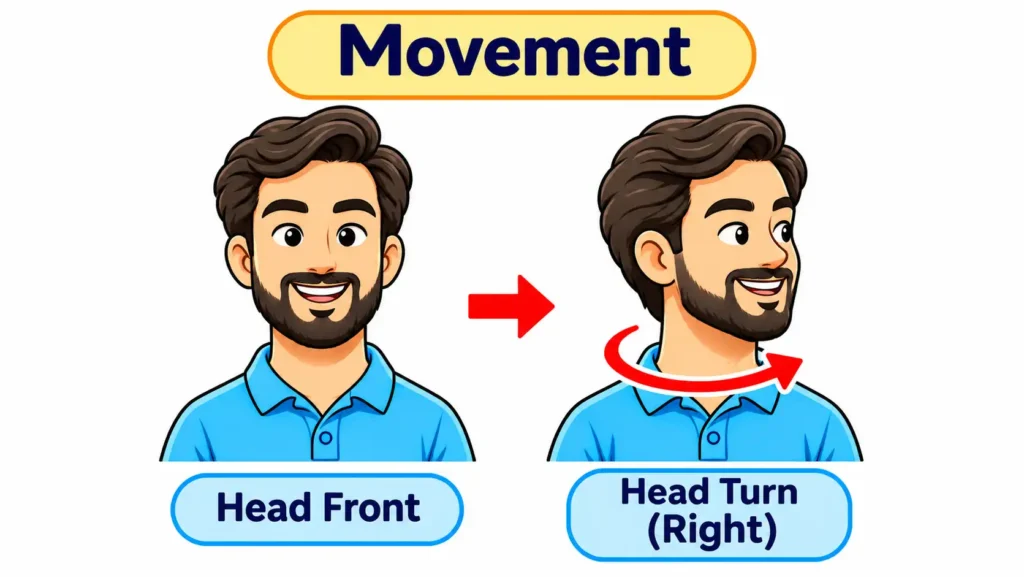
- Turning the Head: When you turn your head to look in another direction, it is called movement.
- Moving Fingers: When you move your fingers while writing or typing, you are performing movement.
- Bending the Body: When you bend your body forward or backward, it is another example of movement.
2. What Is Locomotion?
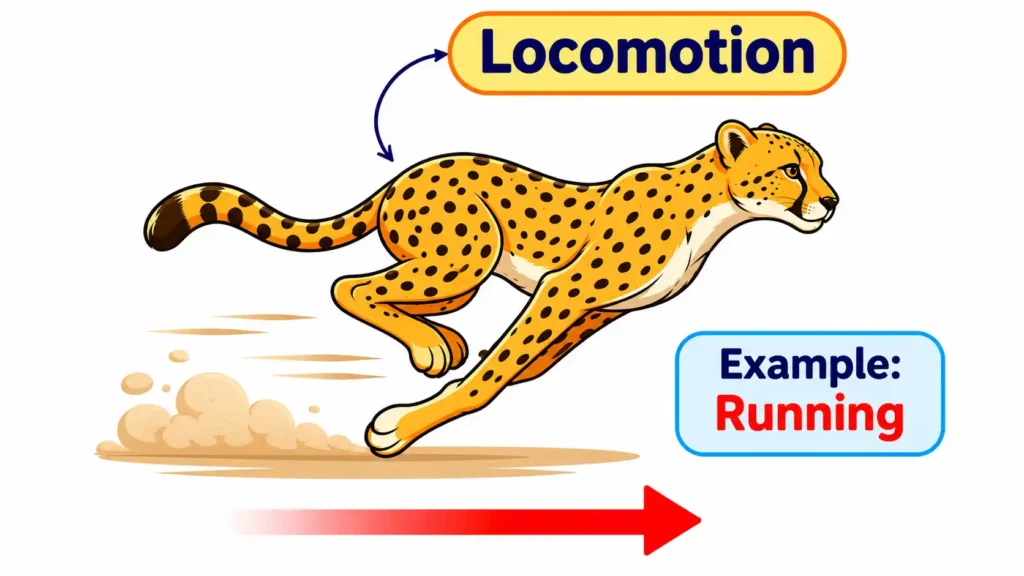
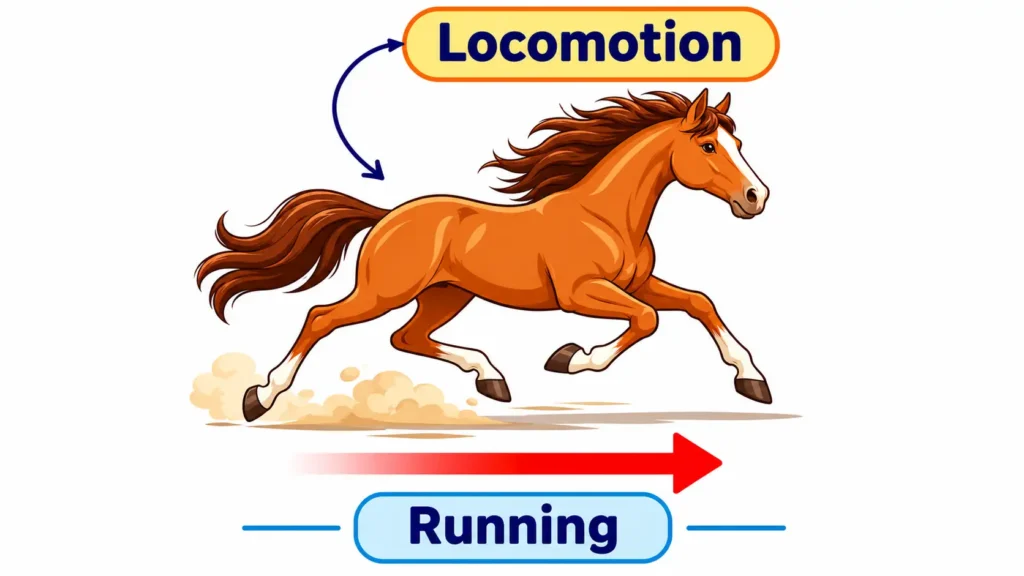
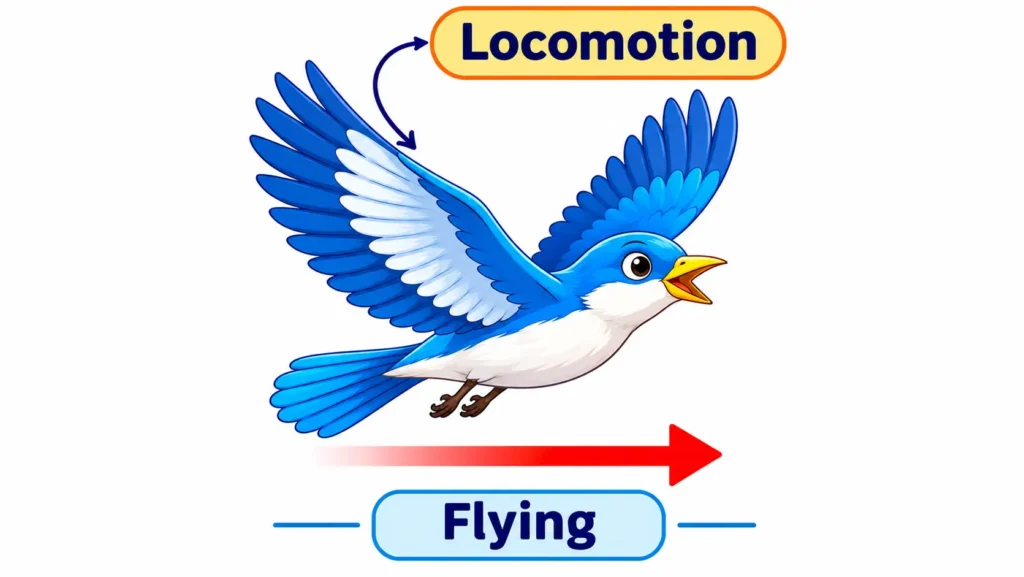
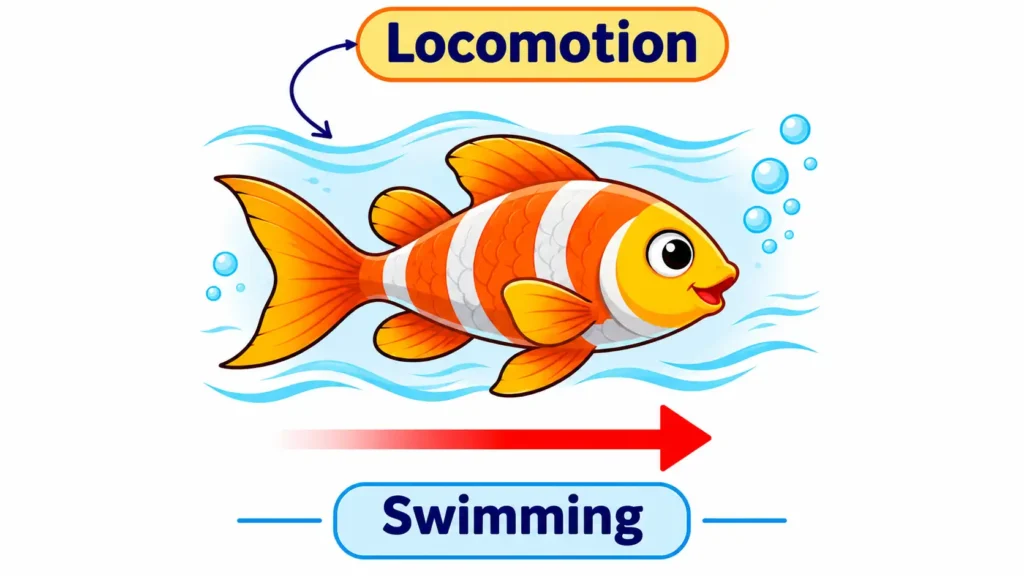
When a living organism changes its location by moving its whole body, it is called locomotion. Locomotion helps animals travel from one place to another in search of food, water and shelter. It also helps them escape from predators and find suitable places to live.
Examples of Locomotion
- Walking: When a person walks from their home to school, their entire body moves from one place to another.
- Running: When a horse runs across a field, it changes its location. This is locomotion.
- Flying: When a bird flies from one tree to another, it performs locomotion.
- Swimming: When a fish swims from one part of a pond to another, it is an example of locomotion.
- Crawling: When a snake crawls from one place to another, it performs locomotion.
3. Difference Between Movement and Locomotion
| Movement | Locomotion |
|---|---|
| Movement is the change in the position of the whole body or any body part. | Locomotion is the movement of an entire organism from one place to another. |
| It does not always involve a change in location. | It always involves a change in location. |
| It can occur without moving the entire body from its place. | It involves the movement of the organism’s body from one place to another. |
| It occurs in both plants and animals. | It is commonly seen in animals and other mobile organisms. |
| Examples include blinking eyes, moving hands and turning the head. | Examples include walking, running, flying and swimming. |
Important Concept
Every locomotion involves movement, but every movement does not involve locomotion.
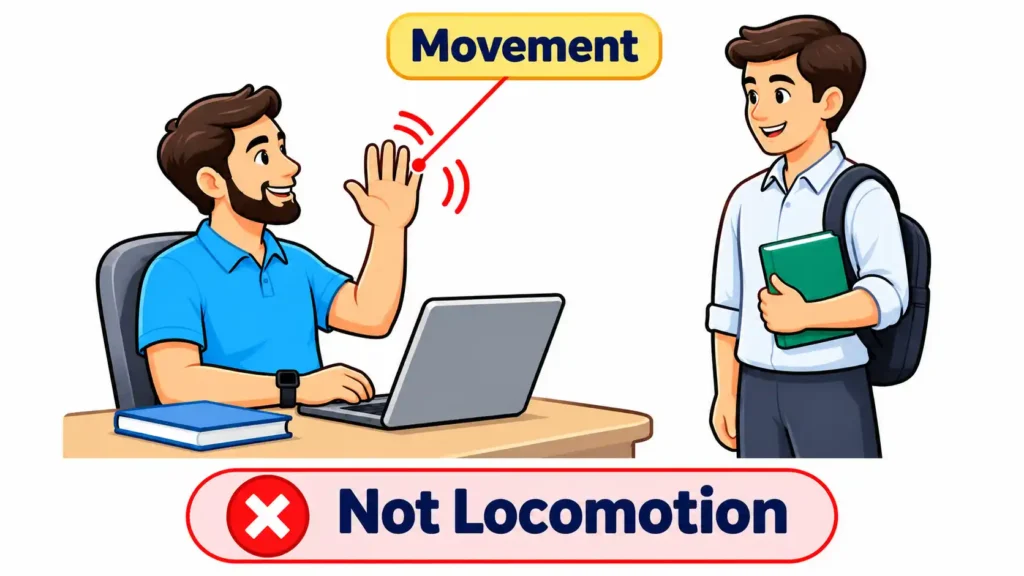
When you wave your hand while sitting, it is only movement because you do not change your location.
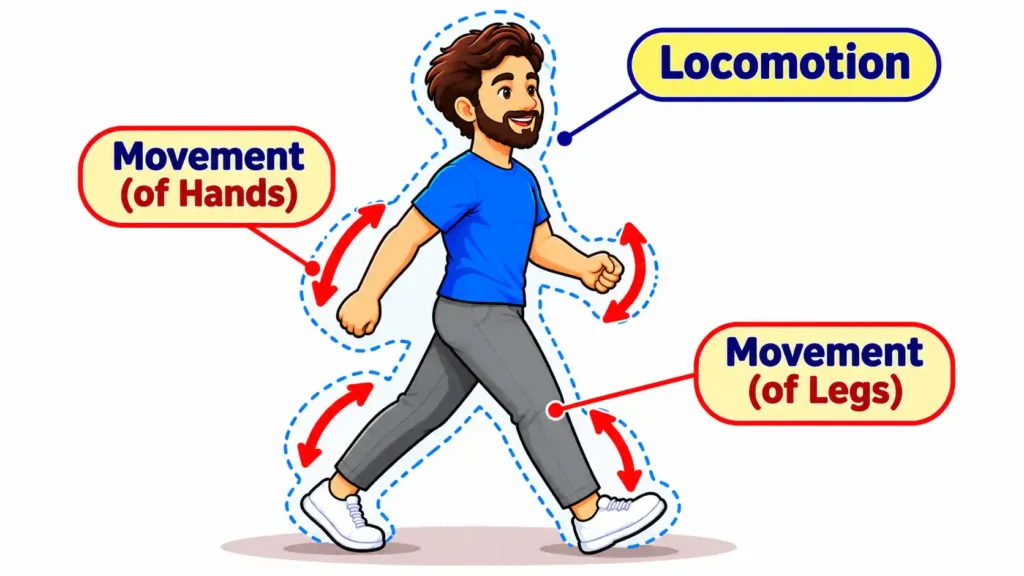
When you walk from one room to another, it is locomotion because your entire body changes its location. Your body parts also move during this activity.
4. Do Plants Show Movement?
Plants cannot move their entire bodies from one location to another like animals, but different parts of their bodies can move in response to light, touch, gravity and other environmental factors.
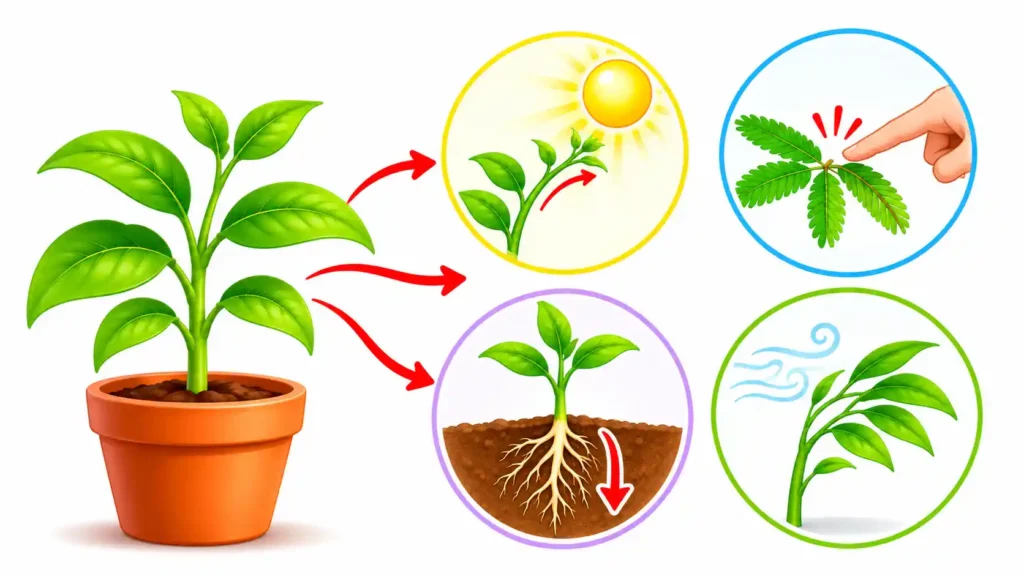
Examples of Movement in Plants
1. Sunflower Turning Towards Sunlight
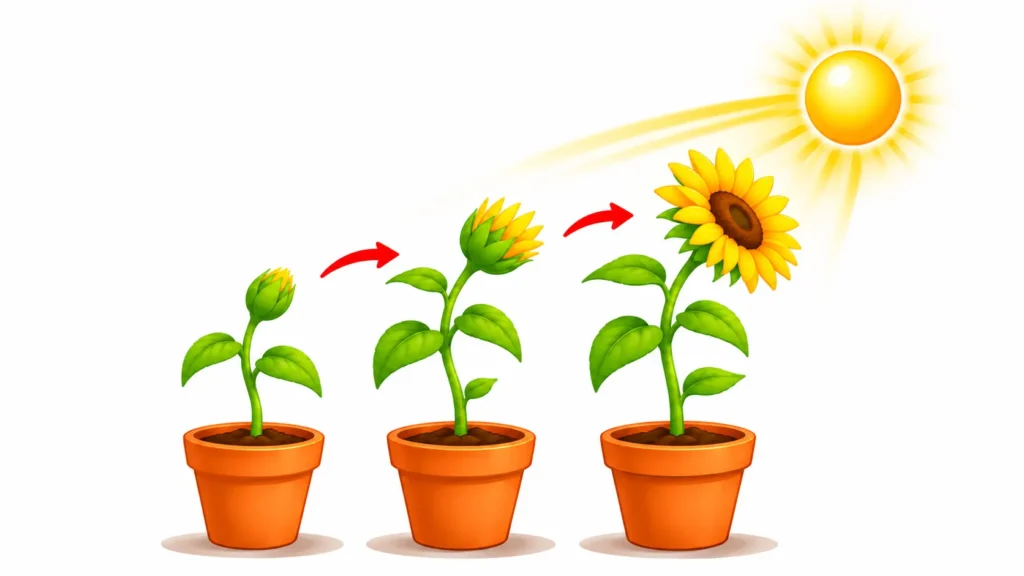
Young sunflower plants show a movement in response to sunlight. Their growing shoots and flower heads can turn towards the direction of the Sun. This movement helps the plant respond to light, which is important for photosynthesis.
2. Touch-Me-Not Plant (Mimosa pudica)
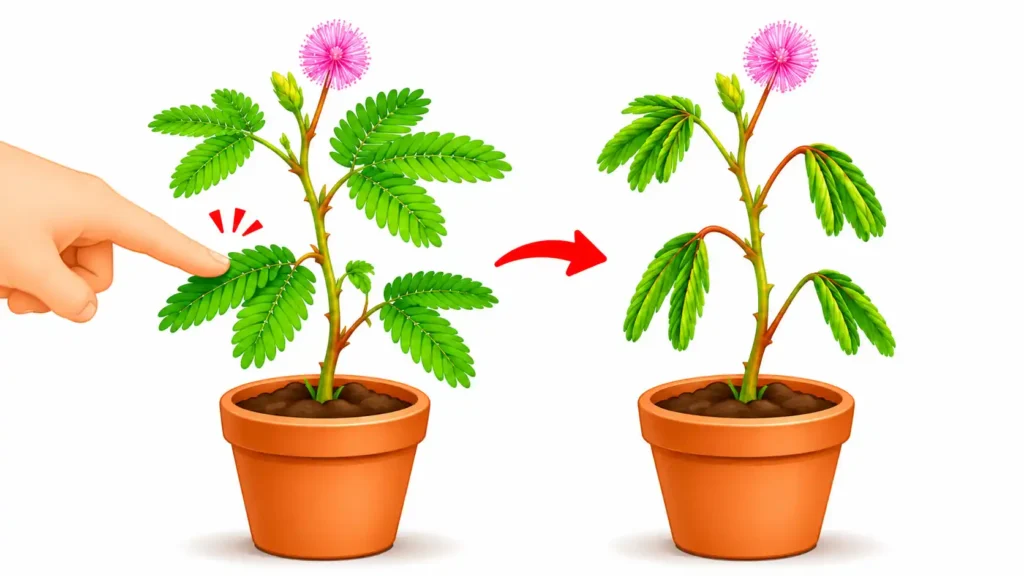
The Touch-Me-Not plant, when someone touches its leaves, they fold and closes within a short time. This movement occurs in response to touch and is a protective response of the plant.
3. Growth of Plant Shoots Towards Light
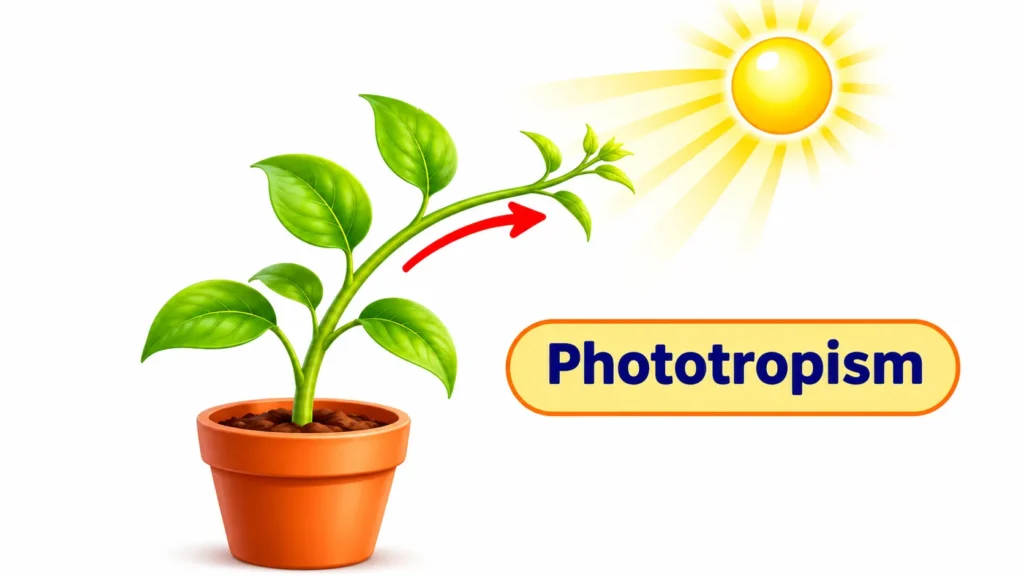
Plant shoots generally grow towards a source of light. This type of movement is called phototropism. It helps plants receive sunlight, which they need to prepare their food through photosynthesis.
4. Growth of Roots Towards Gravity
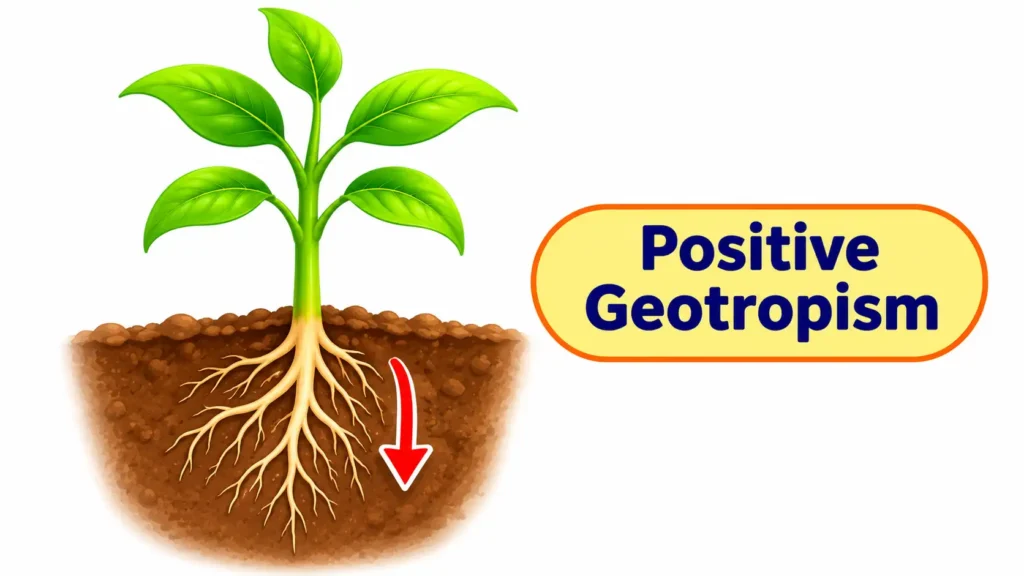
Plant roots generally grow downwards in response to gravity. This movement is known as positive geotropism or positive gravitropism. It helps roots grow into the soil, where they can absorb water and minerals.
Do Plants Perform Locomotion?
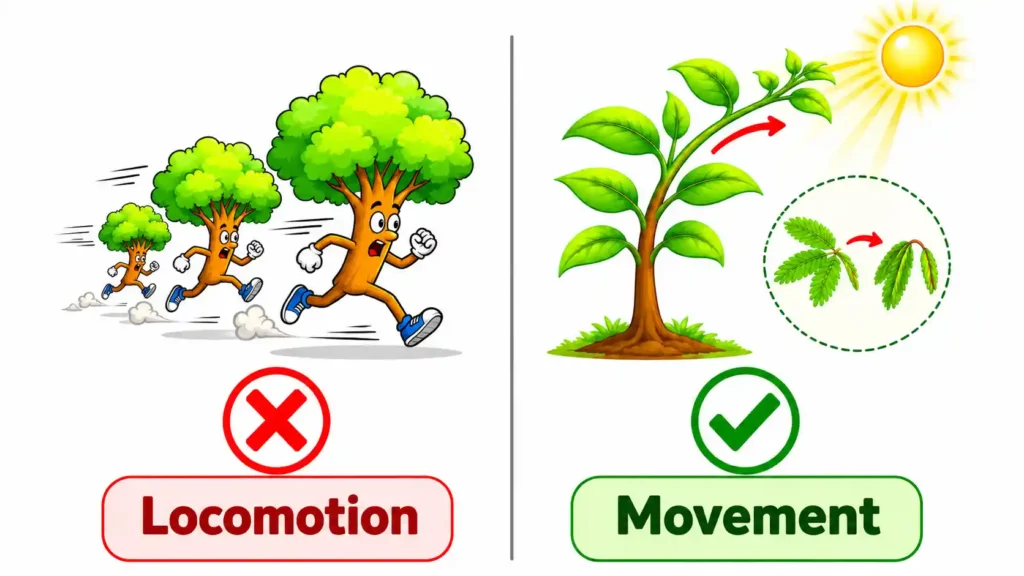
No, most plants do not perform locomotion because they remain fixed in one place. For example, a sunflower may turn towards sunlight, and the leaves of a Touch-Me-Not plant may fold when touched. However, the entire plant does not move from one place to another.
Important Questions and Answers
A. Multiple choice questions and answers – (MCQs)
1. Which activity can a person perform without changing their location?
A. Running
B. Jumping
C. Waving a hand
D. Walking
Ans: C. Waving a hand
2. Which movement helps an earthworm move through the soil?
A. Flying
B. Crawling
C. Swimming
D. Jumping
Ans: B. Crawling
3. Which type of movement occurs when a plant grows towards gravity?
A. Phototropism
B. Positive gravitropism
C. Negative gravitropism
D. Thigmonasty
Ans: B. Positive gravitropism
4. What is the main function of muscles during movement?
A. Producing sunlight
B. Contracting and relaxing
C. Absorbing water
D. Producing oxygen
Ans: B. Contracting and relaxing
5. Which of the following is an example of voluntary movement?
A. Heartbeat
B. Digestion
C. Writing
D. Food movement in the intestine
Ans: C. Writing
6. Which organism uses its umbrella-shaped body to move through water?
A. Earthworm
B. Jellyfish
C. Snail
D. Butterfly
Ans: B. Jellyfish
7. What helps a bird maintain balance and change direction during flight?
A. Roots
B. Tail and feathers
C. Fins
D. Pseudopodia
Ans: B. Tail and feathers
8. Which activity is an example of movement in the human body?
A. A person walking to school
B. A person turning their head
C. A bird flying away
D. A fish swimming across a pond
Ans: B. A person turning their head
9. What is the main purpose of a fish’s fins?
A. Producing food
B. Helping in balance and steering
C. Breathing air
D. Absorbing sunlight
Ans: B. Helping in balance and steering
10. Which activity requires an organism to change its location?
A. Blinking
B. Moving fingers
C. Turning the head
D. Swimming across a pond
Ans: D. Swimming across a pond
B. Fill in the blanks
1. Blinking of the eyes is an example of __________. (Movement)
2. All locomotion is a type of __________. (Movement)
3. The Touch-Me-Not plant is also known as __________. (Mimosa pudica)
4. The movement of plant parts towards light is called __________. (Phototropism)
5. Plant roots generally grow __________ in response to gravity. (Downwards)
6. Fish use their __________ and fins to swim in water. (Tails)
7. A snail moves with the help of its muscular __________. (Foot)
8. The growth of plant parts in response to gravity is called __________. (Gravitropism)
9. Walking, running and swimming are examples of __________. (Locomotion)
10. The movement of a plant towards light helps it perform __________. (Photosynthesis)
11. The movement of an organism from one location to another helps it find food and __________. (Shelter)
C. Short Questions and Answers
1. What is Movement?
Ans: Movement is the change in the position of the whole body or any part of the body of a living organism.
2. What is Locomotion?
Ans: Locomotion is the movement of an entire organism from one place to another.
3. What is the main difference between Movement and Locomotion?
Ans: Movement does not always involve a change in location, whereas locomotion always involves moving from one place to another.
4. Is walking an example of Movement or Locomotion?
Ans: Walking is an example of locomotion because the entire body moves from one place to another. It also involves movement of different body parts.
5. Is blinking of eyes an example of Locomotion?
Ans: No. Blinking of eyes is an example of movement because only the eyelids change their position, while the body remains in the same location.
6. Do plants show Movement?
Ans: Yes. Plants show movement in response to light, touch, gravity and other environmental conditions.
7. Do plants perform Locomotion?
Ans: No, most plants do not perform locomotion because they remain fixed in one place and cannot move their entire bodies from one location to another.
8. Why is the Touch-Me-Not plant called an example of Movement?
Ans: The Touch-Me-Not plant folds its leaves when touched. This is an example of movement because its leaves change their position without the entire plant changing its location.
9. Why is sunflower movement an example of Movement?
Ans: Young sunflowers can turn towards sunlight. This changes the position or direction of their growing parts, but the entire plant does not move to another location.
10. Is Locomotion a type of Movement?
Ans: Yes. Locomotion is a type of movement because an organism changes its position and location while moving from one place to another.
11. Why is every locomotion a movement, but every movement not locomotion?
Ans: Locomotion involves moving the whole body to another place, while movement can happen without changing location.
12. Can movement happen without locomotion?
Ans: Yes, moving your hands, blinking your eyes or turning your head are movements without changing your location.
13. Why is blinking of the eyes called movement?
Ans: Blinking changes the position of the eyelids, but the person stays in the same place.
14. Is walking an example of movement or locomotion?
Ans: Walking is both movement and locomotion because the body changes location and different body parts move.
15. Why do Touch-Me-Not leaves close when touched?
Ans: Their leaves fold in response to touch because of changes in water pressure inside special cells.
16. Why do young sunflowers turn towards sunlight?
Ans: Young sunflowers respond to sunlight, and their growing parts turn towards light to help them receive energy.
17. What is phototropism?
Ans: Phototropism is the growth of a plant part in response to light, usually towards a light source.
18. How do fish move in water?
Ans: Fish use their tails and fins to swim, change direction and maintain balance in water.
19. How does a snake move without legs?
Ans: A snake uses its strong body muscles and scales to move across the ground.
20. Can tiny organisms show locomotion?
Ans: Yes, organisms like Amoeba and Paramecium move from one place to another using special structures.
D. Long questions and answers
1. Explain the difference between Movement and Locomotion with suitable examples.
Ans:
| Movement | Locomotion |
|---|---|
| 1. Movement is the change in the position of the whole body or any part of the body. | 1. Locomotion is the movement of an entire organism from one place to another. |
| 2. It does not always involve a change in location. | 2. It always involves a change in location. |
| 3. It can occur while an organism remains in the same place. | 3. The organism moves from its original location to another location. |
| 4. It occurs in both plants and animals. | 4. It is seen only in animals and humans. |
| 5. It can be voluntary or involuntary. | 5. It may involve voluntary or automatic actions, depending on the organism. |
| 6. Examples – blinking eyes, moving hands, turning the head and folding leaves. | 6. Examples – walking, running, swimming, flying and crawling. |
| 7. It helps organisms respond to changes in their surroundings. | 7. It helps animals find food, water, shelter and escape from enemies. |
2. Explain how plants show movement even though they cannot perform locomotion.
Ans: Plants are fixed in the soil because their roots are attached to the ground. Therefore, most plants cannot move their entire bodies from one place to another. However, different parts of plants can show movement in response to environmental changes.
- Sunflower: Young sunflower plants can turn towards sunlight.
- Touch-Me-Not: Its leaves fold when someone touches them.
- Plant Shoots: Shoots generally grow towards light.
- Plant Roots: Roots generally grow downwards in response to gravity.
These examples show that plants can perform movement without changing their entire location. Therefore, plants generally show movement but not locomotion.
3. Explain the different ways in which animals perform locomotion with examples.
Ans: Animals move from one place to another in different ways depending on their body structure and living environment. This movement is called locomotion.
- Walking: Humans and many land animals use their legs to walk.
- Running: Horses and dogs use their legs to run quickly.
- Flying: Birds use their wings to fly from one place to another.
- Swimming: Fish use their tails and fins to swim through water.
- Crawling: Snakes move by using their body muscles and scales.
- Pseudopodia: Amoeba forms temporary projections called pseudopodia to move.
Related Links
- West Bengal Board 10 Physical Science Concerns about our environment
- West Bengal Board 10 Physical Science Behaviour of gases Notes
- one word substitution
- West Bengal Board 10 Physical Science Concerns about our Environment Questions and Answers
- West Bengal Board 10 Physical Science Syllabus
- WBBSE 10 Result 2026
- Satellite Imageries and Topographical Maps
- Transport and communication system in India
- Population of India
- Industries in India