
Class 10 History Chapter 5: Print Culture and the Modern World Questions and Answers
Content Structure
- 1. NCERT Solutions
- 1A. Write in Brief
- 1B. Discuss
- 2. Extra Questions and Answers
- 2A. Multiple Choice Questions (MCQs)
- 2B. Very Short Type Questions and Answers
- 2C. Short Answer-type Questions
- 2D. Case/Source-based Questions and Answers
- 2E. Long Questions and Answers
1. NCERT Solutions
1A. Write in Brief
1. Give reasons for the following:
a) Woodblock print only came to Europe after 1295.
Ans: Woodblock printing came to Europe after 1295 because Marco Polo brought the knowledge of woodblock printing from China to Italy. After that, Italians began producing books using woodblocks, and the technology gradually spread to other parts of Europe.
b) Martin Luther was in favour of print and spoke out in praise of it.
Ans: Martin Luther supported print because it helped his ideas reach a large number of people. His writings were printed and widely read, helping to spread the Protestant Reformation. Therefore, he called printing “the ultimate gift of God and the greatest one.”
c) The Roman Catholic Church began keeping an Index of Prohibited Books from the mid-sixteenth century.
Ans: The Roman Catholic Church feared that printed books would spread ideas against its teachings. Menocchio’s interpretations of the Bible increased these fears. Therefore, the Church imposed strict controls on publishers and booksellers and began maintaining an Index of Prohibited Books from 1558.
d) Gandhi said the fight for Swaraj is a fight for liberty of speech, liberty of the press, and freedom of association.
Ans: Gandhi believed that freedom of speech, freedom of the press and freedom of association were necessary for the freedom struggle. These freedoms allowed people to express their opinions, spread nationalist ideas and unite against British rule.
2. Write short notes to show what you know about:
a) The Gutenberg Press
Ans: Johann Gutenberg developed the first-known printing press in the 1430s. He used the model of an olive press and developed movable metal types for printing. By 1448, he had perfected the system. His first printed book was the Bible. About 180 copies were printed, and it took three years to produce them. The Gutenberg press made book production faster and cheaper.
b) Erasmus’s Idea of the Printed Book
Ans: Erasmus was a Latin scholar and a Catholic reformer. He was worried about the large number of books being printed. He believed that too many books could harm scholarship because many books contained foolish, ignorant, scandalous and irreligious ideas. He feared that the large number of books would reduce the value of useful and important publications.
c) The Vernacular Press Act
Ans: The Vernacular Press Act of 1878 was introduced by the British government to control Indian-language newspapers. It gave the government the power to censor reports and editorials that criticised British rule. The Act was used to restrict the freedom of the Indian press.
3. What did the spread of print culture in nineteenth-century India mean to:
a) Women
Ans: Print culture encouraged women to read and write. Women’s journals and books discussed women’s education, widowhood and social problems. Some women writers, such as Rashsundari Devi, Tarabai Shinde and Pandita Ramabai, expressed their experiences and ideas through writing.
b) The Poor
Ans: Print culture made books and newspapers available to poor people at cheaper prices. Workers and lower-caste people used print to express their experiences and raise their voices against social injustice. Print helped spread ideas about equality and social reform.
c) Reformers
Ans: Print culture helped reformers spread their ideas among a large number of people. They used newspapers, journals and books to discuss social and religious problems, such as caste discrimination, widowhood and the condition of women. Print encouraged debates and helped reformers challenge harmful social practices.
1B. Discuss
1. Why did some people in eighteenth-century Europe think that print culture would bring enlightenment and end despotism?
Ans: Some people in eighteenth-century Europe believed that print culture would spread knowledge, reason and enlightenment. Books made the ideas of Enlightenment thinkers like Voltaire and Rousseau available to many people. These thinkers criticised superstition, traditional beliefs and the despotic power of the state and the Church. Print created a new culture of discussion and debate. People began questioning old ideas, social rules and institutions. Printed books and writings also criticised the monarchy and exposed its wrong actions. Therefore, people believed that print would spread awareness, encourage people to think rationally and weaken the power of despotic rulers. Louise-Sebastien Mercier believed that the printing press was a powerful tool for progress and that public opinion could destroy despotism.
2. Why did some people fear the effect of easily available printed books? Choose one example from Europe and one from India.
Ans: Some people feared printed books because they believed that books could spread rebellious, irreligious and harmful ideas. They worried that people might question religious and political authorities. Example from Europe: The Roman Catholic Church feared that printed books would spread ideas against its teachings. Menocchio, an Italian miller, reinterpreted the Bible after reading books. The Church considered his ideas dangerous and eventually executed him. Example from India: Conservative families feared that women’s education and reading would harm traditional family values. Some conservative Hindus believed that a literate girl would become a widow. Some Muslims feared that women would be corrupted by reading Urdu romances. Thus, many people opposed women’s reading and education.
3. What were the effects of the spread of print culture for poor people in nineteenth-century India?
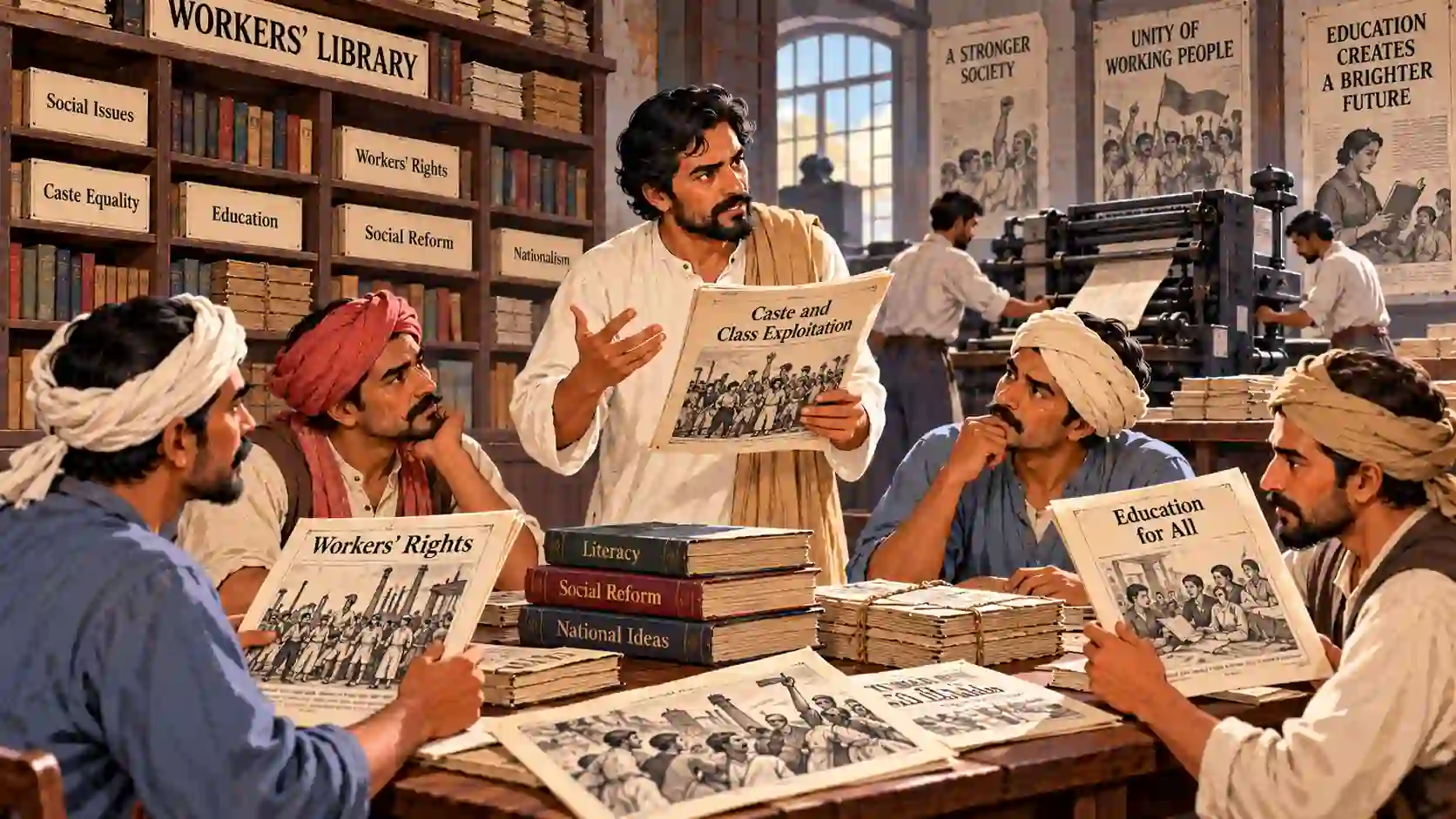
Ans: The spread of print culture helped poor people gain greater access to books and ideas. Very cheap small books were sold at crossroads and markets in nineteenth-century Madras. This allowed poor people to buy books while travelling to markets. Public libraries, established from the early twentieth century, also increased access to books. Print gave poor and lower-caste people an opportunity to express their experiences and discuss social injustice. Jyotiba Phule wrote about the unfair caste system in his book Gulamgiri in 1871. Later, B.R. Ambedkar and Periyar wrote against caste discrimination. Workers also used print to express their problems. Some workers established libraries to educate themselves, develop literacy and spread the message of nationalism.
4. Explain how print culture assisted the growth of nationalism in India.
Ans: Print culture helped the growth of nationalism by spreading ideas, news and information among people. Newspapers carried news from one part of India to another and created a feeling of unity among people living in different regions. They helped develop pan-Indian identities. Printed newspapers and writings also allowed people to discuss social and political issues. They criticised government policies and encouraged people to think about the welfare of the country. Nationalist writings and cartoons criticised British rule and spread awareness among Indians. Print also helped reformers, political groups and ordinary people express their opinions. Workers’ libraries sometimes spread the message of nationalism. In this way, newspapers, books, journals and printed images helped connect people and spread nationalist ideas throughout India.
2. Extra Questions and Answers
2A. Multiple Choice Questions (MCQs)
1. Where was the earliest kind of print technology developed?
A. India
B. China, Japan and Korea
C. France
D. Germany
Ans: B. China, Japan and Korea
2. Who introduced hand-printing technology to Japan?
A. European traders
B. Indian rulers
C. Buddhist missionaries from China
D. French soldiers
Ans: C. Buddhist missionaries from China
3. Which is the oldest Chinese book mentioned in the chapter?
A. The Bible
B. The Diamond Sutra
C. The Ramcharitmanas
D. The Jikji
Ans: B. The Diamond Sutra
4. In which year was the Diamond Sutra printed?
A. AD 594
B. AD 868
C. AD 1295
D. AD 1430
Ans: B. AD 868
5. Who brought the knowledge of woodblock printing to Italy?
A. Marco Polo
B. Johann Gutenberg
C. Martin Luther
D. Erasmus
Ans: A. Marco Polo
6. In which year did Marco Polo return to Italy?
A. 1195
B. 1295
C. 1395
D. 1495
Ans: B. 1295
7. What was vellum made from?
A. Tree bark
B. Animal skin
C. Cotton
D. Bamboo
Ans: B. Animal skin
8. Where did Johann Gutenberg develop the first-known printing press?
A. London
B. Strasbourg
C. Paris
D. Rome
Ans: B. Strasbourg
9. In which decade did Gutenberg develop the printing press?
A. 1410s
B. 1420s
C. 1430s
D. 1460s
Ans: C. 1430s
10. What was the first book printed by Gutenberg?
A. The Bible
B. The Quran
C. The Diamond Sutra
D. The Ramcharitmanas
Ans: A. The Bible
11. Approximately how many copies of the Bible did Gutenberg print?
A. 50
B. 180
C. 500
D. 1,000
Ans: B. 180
12. Which machine provided the model for Gutenberg’s printing press?
A. Steam engine
B. Olive press
C. Sewing machine
D. Water pump
Ans: B. Olive press
13. What was used to cast the metal letters in Gutenberg’s press?
A. Wooden blocks
B. Lead moulds
C. Stone plates
D. Paper sheets
Ans: B. Lead moulds
14. Who wrote the Ninety-Five Theses in 1517?
A. Martin Luther
B. Johann Gutenberg
C. Voltaire
D. Rousseau
Ans: A. Martin Luther
15. What movement began partly due to the spread of Martin Luther’s writings?
A. Industrial Revolution
B. Protestant Reformation
C. French Revolution
D. Russian Revolution
Ans: B. Protestant Reformation
16. Who was Menocchio?
A. A printer from Germany
B. An Italian miller
C. A French king
D. A Chinese scholar
Ans: B. An Italian miller
17. Assertion (A): Printing reduced the cost of books.
Reason (R): Printing allowed multiple copies to be produced more easily and quickly.
A. Both A and R are true, and R correctly explains A.
B. Both A and R are true, but R does not correctly explain A.
C. A is true, but R is false.
D. A is false, but R is true.
Ans: A. Both A and R are true, and R correctly explains A.
18. Assertion (A): The printing press created a new reading public.
Reason (R): Printed books became cheaper and reached more people.
A. Both A and R are true, and R correctly explains A.
B. Both A and R are true, but R does not correctly explain A.
C. A is true, but R is false.
D. A is false, but R is true.
Ans: A. Both A and R are true, and R correctly explains A.
19. Assertion (A): Print helped spread Martin Luther’s ideas.
Reason (R): Luther’s writings were reproduced in large numbers and read widely.
A. Both A and R are true, and R correctly explains A.
B. Both A and R are true, but R does not correctly explain A.
C. A is true, but R is false.
D. A is false, but R is true.
Ans: A. Both A and R are true, and R correctly explains A.
20. Assertion (A): Some people feared the spread of printed books.
Reason (R): They believed that rebellious and irreligious ideas could spread through print.
A. Both A and R are true, and R correctly explains A.
B. Both A and R are true, but R does not correctly explain A.
C. A is true, but R is false.
D. A is false, but R is true.
Ans: A. Both A and R are true, and R correctly explains A.
21. Assertion (A): Print completely removed oral culture.
Reason (R): Printed books were also read aloud and transmitted orally.
A. Both A and R are true, and R correctly explains A.
B. Both A and R are true, but R does not correctly explain A.
C. A is true, but R is false.
D. A is false, but R is true.
Ans: D. Assertion is false, but Reason is true.
22. Which of the following correctly differentiates manuscripts and printed books?
A. Manuscripts were copied by hand, while printed books were produced using printing technology. B. Manuscripts were always cheaper than printed books. C. Printed books could not be reproduced in large numbers. D. Both were produced only by the imperial state.
Ans: A. Manuscripts were copied by hand, while printed books were produced using printing technology.
23. What is the difference between oral culture and reading culture?
A. Oral culture depended on listening, while reading culture depended on reading texts.
B. Oral culture used printing presses, while reading culture used storytelling.
C. Both cultures depended only on handwritten manuscripts.
D. Reading culture existed only in China.
Ans: A. Oral culture depended on listening, while reading culture depended on reading texts.
24. What is the difference between woodblock printing and mechanical printing?
A. Woodblock printing used carved blocks, while mechanical printing used movable types and a press.
B. Woodblock printing used only metal types.
C. Mechanical printing was slower than copying by hand.
D. Both methods used exactly the same technology.
Ans: A. Woodblock printing used carved blocks, while mechanical printing used movable types and a press.
Very short-type Questions and Answers
1. Where was the earliest print technology developed?
Ans: The earliest print technology developed in China, Japan and Korea. In China, books were printed by rubbing paper against inked wooden blocks. This method made it possible to produce several copies of books and spread knowledge among readers.
2. What was the role of the imperial state in Chinese printing?
Ans: The imperial state in China printed textbooks for civil service examinations. As the number of examination candidates increased, the demand for printed books also grew. Printing therefore became an important part of the educational and administrative system.
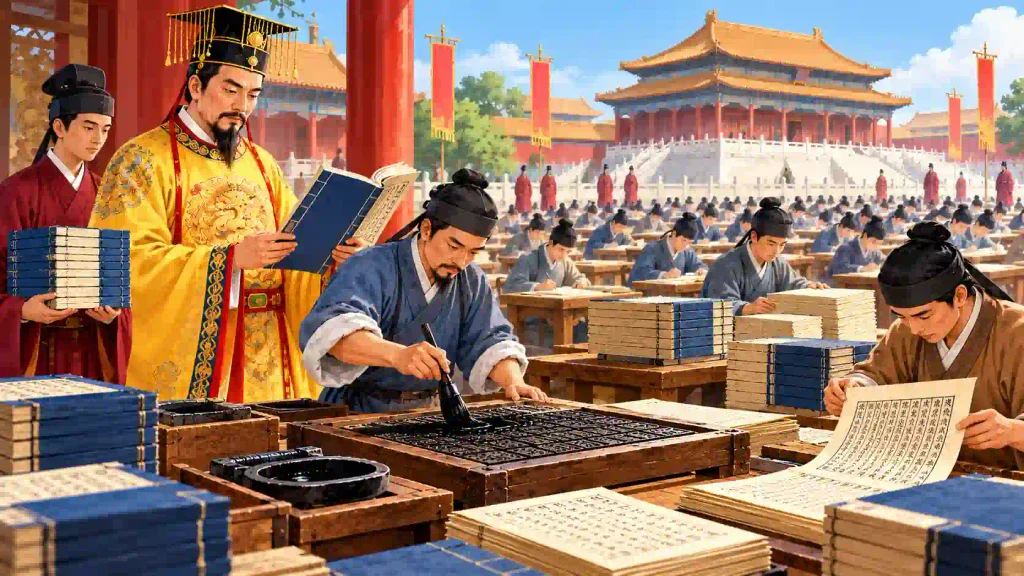
3. What was the effect of printing on the cost of books?
Ans: Printing reduced the cost of books because many copies could be produced more quickly. Books became more affordable for ordinary people. As prices decreased, more people could purchase books, and reading gradually spread among different sections of society.
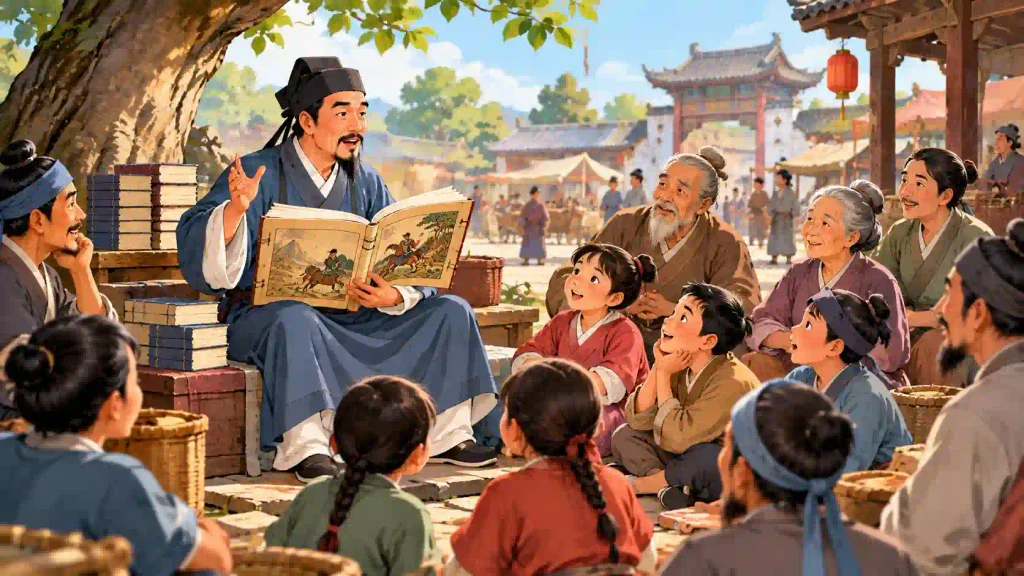
4. What was oral culture?
Ans: Oral culture was a tradition in which people shared stories, poems and information by speaking and listening. Many people could not read, so printed stories were often read aloud to them. In this way, print and oral culture continued together.
5. Who was Martin Luther?
Ans: Martin Luther was a religious reformer who criticised certain practices of the Roman Catholic Church. In 1517, he wrote the Ninety-Five Theses. His writings were printed widely and helped spread the ideas of the Protestant Reformation.
6. What was the Protestant Reformation?
Ans: The Protestant Reformation was a religious movement that challenged the authority and practices of the Roman Catholic Church. Martin Luther’s writings played an important role in this movement. Printing helped spread his ideas to a large number of people.
7. Why did some people fear printed books?
Ans: Some people feared printed books because they could spread rebellious, irreligious and critical ideas. Religious authorities and rulers worried that readers might question existing beliefs and institutions. Therefore, they tried to control or restrict certain printed materials.
8. Why did people believe that print could bring enlightenment?
Ans: Many people believed that books could spread knowledge, reason and progress. They thought reading would help people question superstition, despotism and traditional authority. Enlightenment thinkers believed that reason and intellect could improve society and challenge injustice.
9. How did print help the French Revolution?
Ans: Print helped spread the ideas of Enlightenment thinkers such as Voltaire and Rousseau. It encouraged discussion and criticism of existing institutions. Printed cartoons and writings also criticised the monarchy and helped create questioning attitudes among the public.
10. Why did print not influence everyone in the same way?
Ans: People did not read only one type of material. They accepted some ideas and rejected others according to their understanding. Their experiences and beliefs influenced their opinions. Therefore, print opened possibilities for new thinking but did not control everyone’s mind.
11. What was the role of women in nineteenth-century print culture?
Ans: Women became important readers and writers during the nineteenth century. Journals and books discussed women’s education and lives. Writers such as Jane Austen, the Brontë sisters and George Eliot helped present women as thoughtful, determined and independent individuals.
12. Why did some families oppose women’s education?
Ans: Some conservative families believed that women’s education could harm traditional values. Certain Hindu families feared that educated girls would become widows, while some Muslims feared that reading romances would corrupt women. These beliefs restricted women’s access to education.
13. What was the importance of lending libraries?
Ans: Lending libraries helped educate white-collar workers, artisans and lower-middle-class people. They allowed people to read books without buying them. During the nineteenth century, these libraries encouraged self-education, reading habits and the development of knowledge among working people.
14. When did printing first come to India?
Ans: The printing press fir st came to Goa with Portuguese missionaries in the mid-sixteenth century. Jesuit priests learned Konkani and printed several religious tracts. By 1674, many books had been printed in Konkani and Kanara languages.
15. How did print encourage religious debates in India?
Ans: Printed tracts and newspapers spread different religious ideas among people. Reformers and conservative groups used print to present their arguments and oppose one another. This increased public discussion and allowed more people to participate in religious debates.
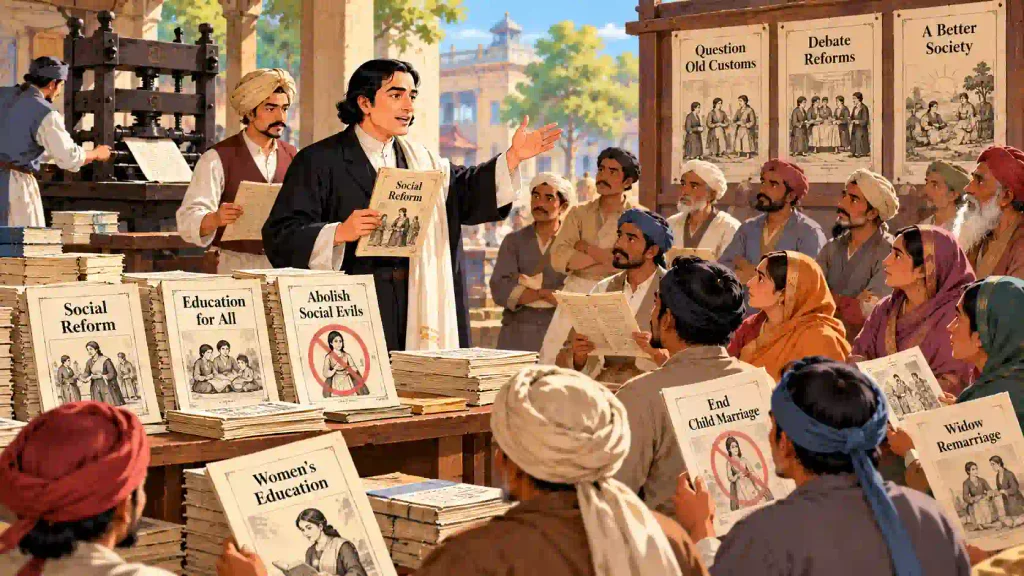
16. What was the role of print in social reform?
Ans: Print helped social reformers spread their ideas among a wider audience. Newspapers, books and pamphlets discussed social and religious practices. They encouraged people to question existing customs, debate reforms and develop new opinions about society.
17. What was the importance of children’s press in France?
Ans: A children’s press was established in France in 1857. It published books specially written for children. It also printed fairy tales and folk tales. This helped children develop reading habits and made children an important group of readers in the nineteenth century.
18. How did lending libraries help people?
Ans: Lending libraries helped people read books without purchasing them. In nineteenth-century England, they educated white-collar workers, artisans and lower-middle-class people. These libraries encouraged reading, self-education and the development of knowledge among people from different social groups.
19. What was the importance of Penny Magazine?
Ans: Penny Magazine was published in England between 1832 and 1835. It was mainly intended for working-class readers. It provided useful and affordable reading material. The magazine helped spread knowledge and encouraged reading among ordinary people.
20. How did print help women in India?
Ans: Print helped women by increasing access to education and reading materials. Journals discussed women’s education, widowhood and social problems. Some publications were written or edited by women. These writings allowed women to express their experiences and question unfair social practices.
21. Who was Kailashbashini Debi?
Ans: Kailashbashini Debi was a Bengali writer who wrote about women’s experiences. Her writings described how women were confined at home, denied education, forced to perform difficult domestic work and treated unfairly by the people they served.
22. What was the contribution of Begum Rokeya Sakhawat Hossein?
Ans: Begum Rokeya Sakhawat Hossein was an educationist and writer. She strongly supported women’s education. In 1926, she criticised men who denied education to women in the name of religion and argued that women had an equal right to education.
23. How did print reach poor people in India?
Ans: Very cheap small books were sold at crossroads and markets in nineteenth-century Madras towns. Poor people travelling to markets could easily purchase them. Public libraries, established from the early twentieth century, further increased access to books among ordinary people.
24. What were the aims of workers’ libraries?
Ans: Workers’ libraries were established to educate workers and encourage self-improvement. In the 1930s, Bangalore cotton millworkers set up libraries by following Bombay workers’ example. These libraries promoted literacy and sometimes spread social reform and nationalist ideas.
25. What was the Vernacular Press Act?
Ans: The Vernacular Press Act was passed in 1878 by the colonial government. It gave officials wide powers to censor reports and editorials in Indian-language newspapers. If a newspaper published material considered seditious, its press and printing machinery could be seized.
26. Why was Bal Gangadhar Tilak imprisoned in 1908?
Ans: In 1907, Punjab revolutionaries were deported. Bal Gangadhar Tilak wrote sympathetically about them in his newspaper, Kesari. The colonial government imprisoned him in 1908. His imprisonment led to widespread protests across India and increased opposition to colonial restrictions.
Short-type Questions and Answers
1. Explain the relationship between print and the Protestant Reformation.
Ans: Martin Luther criticised the practices of the Catholic Church. His writings were printed and widely circulated. Printing helped spread his ideas among people and encouraged debate about religion. In this way, print played an important role in the growth of the Protestant Reformation.
2. Why did some people fear the spread of printed books?
Ans: Some people feared that printed books could spread rebellious, irreligious and harmful ideas. Religious authorities worried that people might question their teachings. Rulers also feared criticism and opposition. Therefore, certain authorities tried to control books and printed materials.
3. How did print create a new reading public?
Ans: Printing reduced the cost of books and increased their availability. Earlier, books were mainly used by educated and wealthy people. With cheaper publications, workers, women, children and poor people also began reading. Thus, print created a larger and more diverse reading public.
4. Describe the role of women in the nineteenth-century print culture.
Ans: Women became important readers and writers during the nineteenth century. Journals discussed women’s education and social problems. Women writers expressed their experiences through books and articles. Their writings questioned unfair customs and encouraged people to think about women’s rights and education.
5. How did print help spread social reform ideas in India?
Ans: Printed books, journals and essays discussed social problems such as caste discrimination, women’s education and widowhood. Reformers used print to criticise unfair customs and spread new ideas. Their writings reached many readers and encouraged discussion about social equality and reform.
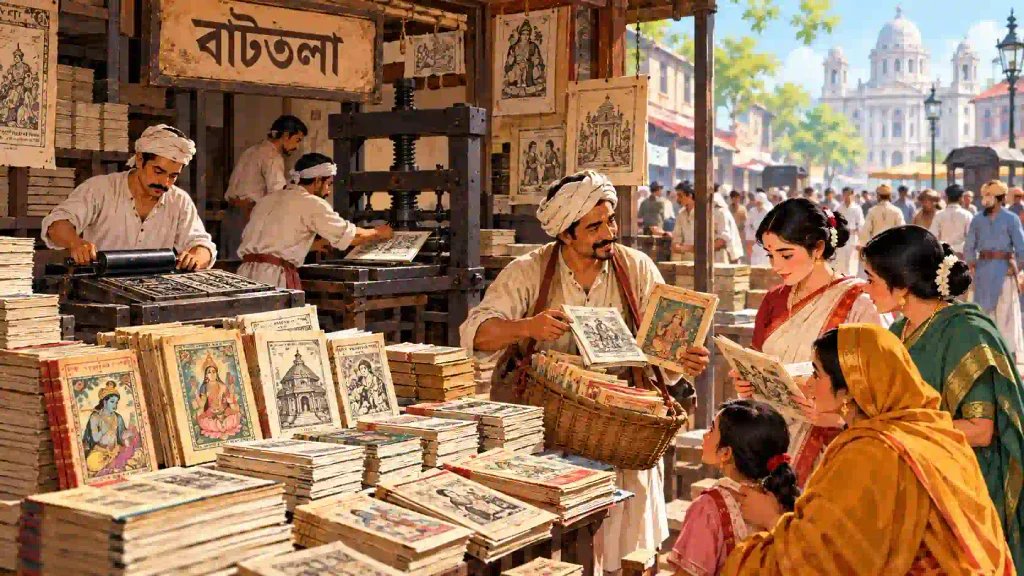
6. What was the importance of the Battala printing centre?
Ans: Battala in central Calcutta was famous for producing cheap popular books. It printed religious texts, scriptures and other literature, often with illustrations. Pedlars carried these books to homes, making reading materials available to women and people who had limited access to bookshops.
7. How did print reach poor people in India?
Ans: Cheap books were sold in markets and at crossroads in nineteenth-century Madras towns. Public libraries were also established from the early twentieth century. These developments allowed poor people to access books and increased their opportunities for education and self-improvement.
8. How did print help workers in India?
Ans: Print allowed workers to express their problems and learn about social issues. Kashibaba wrote about caste and class exploitation. Workers also established libraries to educate themselves. These libraries promoted literacy, social reform and sometimes nationalist ideas among working people.
9. What was the purpose of the Vernacular Press Act of 1878?
Ans: The Vernacular Press Act was introduced by the colonial government to control Indian-language newspapers. It gave officials the power to censor reports and editorials considered seditious. Newspapers could be warned, and their printing presses and machinery could be seized if they disobeyed.
10. How did print influence the development of visual culture?
Ans: Printing made it possible to reproduce pictures in large numbers. Artists such as Raja Ravi Varma produced images for mass circulation. Cheap prints and calendars were sold in markets. Cartoons and caricatures also discussed social and political issues and influenced public opinion.
11. Why was print important for the development of nationalism in India?
Ans: Print spread information about colonial injustice and nationalist activities. Newspapers, pamphlets and journals connected people from different regions. They encouraged political discussion and created awareness about common problems. In this way, print helped develop a sense of unity and nationalism in India.
12. What was the role of Martin Luther in the print revolution?
Ans: Martin Luther criticised certain practices of the Catholic Church. His writings were printed and distributed widely. His ideas reached many people and encouraged religious debates. Printing helped spread the Protestant Reformation and challenged the authority of the Catholic Church.
13. How did print help the Protestant Reformation?
Ans: Print helped the Protestant Reformation by spreading the writings and ideas of reformers such as Martin Luther. Books and pamphlets reached a large number of people. Readers could discuss religious ideas and question the practices of the Catholic Church.
14. How did oral culture and print culture work together?
Ans: Oral culture and print culture were closely connected. Many people could not read, so books and newspapers were read aloud to them. Public readings helped printed ideas reach people who were not educated or could not read independently.
15. Why did the literacy rate increase in Europe?
Ans: The literacy rate increased because schools expanded and printed books became cheaper. People began to understand the importance of reading for education and employment. The availability of books and newspapers also encouraged more people to learn reading and writing.
16. What was the importance of chapbooks?
Ans: Chapbooks were small and inexpensive books sold by travelling sellers. They contained stories, religious texts and popular information. Since they were cheap, ordinary people could purchase them. Chapbooks helped spread reading habits among the lower and middle classes.
17. What was the purpose of the Penny Magazine?
Ans: The Penny Magazine was a cheap publication intended for ordinary readers. It contained information about science, history, culture and society. Its low price made knowledge available to a wider audience, especially the working and middle classes.
18. How did print encourage scientific ideas?
Ans: Printed books, journals and magazines helped scientists share their discoveries. Scientific knowledge could reach readers in different places. Print encouraged discussions, experiments and the exchange of ideas. It also helped ordinary people learn about science and new inventions.
19. Why was print important for social reform in India?
Answer: Print helped reformers spread ideas against social inequalities and harmful customs. Books, newspapers and journals discussed caste discrimination, women’s education and social injustice. These publications encouraged public debate and helped reformers reach a wider audience.
2D. Case/Source-based Questions and Answers
Case/Source-Based Question 1: The Print Revolution
Read the source and answer the questions.
The invention and development of the printing press brought a major change in the lives of people. Before printing became common, books were copied by hand by scribes. This process was slow, costly and required a great deal of time and labour. As a result, books were usually available only to rich, educated and privileged people. With the development of the printing press, books could be produced in large numbers within a shorter period and at a lower cost. This made books more affordable and allowed people from different sections of society to buy and read them. The spread of printing also encouraged the publication of newspapers, journals, pamphlets, religious books and other forms of literature. As printed materials reached more people, a new reading public gradually developed. Print also helped spread religious, political, scientific and social ideas and encouraged people to discuss existing customs, beliefs and authorities.
(a) How did printing reduce the cost of books?
Ans: Printing reduced the cost of books by making the process of book production faster, easier and more efficient. Before the printing press, books had to be copied by hand by trained scribes. This required a great deal of time, labour and money, and only a limited number of copies could be prepared. The printing press made it possible to print the same page many times without copying it again by hand. Large numbers of books could therefore be produced within a short period. Since less time and labour were needed for each copy, the cost of producing books became lower. As a result, books became cheaper and more people could afford to buy and read them.
(b) What changes did the print revolution bring to society?
Ans: The print revolution brought several important changes to society. It made books cheaper and helped knowledge reach people from different sections of society. As printed materials became more easily available, a new reading public developed among ordinary people. Books, newspapers, journals and pamphlets spread religious, political, scientific and social ideas more widely than before. People could learn about new ideas and developments without depending only on oral communication. Print also encouraged discussions about social customs, religious beliefs and traditional practices. Some readers began to question established ideas and authorities. In this way, the print revolution not only increased access to books but also encouraged education, awareness, discussion and the exchange of ideas among people.
Case/Source-Based Question 2: Gutenberg and the Printing Press
Read the source and answer the questions.
Johann Gutenberg played an important role in the development of the printing press in Europe during the fifteenth century. He developed a printing system using movable metal types, which could be arranged to form different words and pages. These types could then be reused for printing other pages and books. Gutenberg’s method made the production of books much faster than the earlier practice of copying books by hand. He printed the Bible, which became one of the earliest major books printed in Europe. The development of Gutenberg’s printing press made it possible to produce books in much larger numbers. As the number of printed books increased, their prices gradually became more affordable. The new technology helped printed materials reach a wider section of European society. It also played an important role in spreading religious ideas, education, scientific knowledge and political discussions and contributed to the growth of a new reading public.
(a) Who developed the first-known printing press in Europe?
Ans: Johann Gutenberg developed the first-known printing press in Europe during the fifteenth century. He was associated with Mainz in Germany and developed a printing system based on movable metal types. These metal letters could be arranged to form different words, sentences and pages and could then be reused. This made the printing process much faster and more efficient than copying books by hand. Gutenberg’s invention became an important turning point in the history of printing in Europe. It helped increase the number of books available to readers and gradually made printed knowledge more accessible to different sections of society.
(b) Mention two important features of Gutenberg’s printing press.
Ans: Two important features of Gutenberg’s printing press were the use of movable metal types and the ability to produce many copies of books more quickly. The metal letters could be arranged in different ways to form words and sentences. After printing one page, the same letters could be rearranged and used again for another page or book. This made the printing process reusable and efficient. The press also reduced the time and labour required to produce books. Unlike handwritten copying, which could take months or even years, printing allowed a large number of copies to be produced in a much shorter period.
(c) Why was Gutenberg’s invention important?
Ans: Gutenberg’s invention was important because it transformed the production and distribution of books in Europe. Before the printing press, books were mainly copied by hand, making them expensive, slow to produce and limited in number. Gutenberg’s printing method allowed books to be produced in large quantities and at a comparatively lower cost. As books became more easily available, a larger number of people could gain access to knowledge and reading materials. Printed books helped spread religious teachings, scientific discoveries, educational ideas and political discussions. The invention therefore contributed greatly to the growth of literacy and the development of a wider reading public in Europe.
Case/Source-Based Question 3: Women and Print
Read the source and answer the questions.
During the nineteenth century, women gradually became important readers and writers in different parts of society. The spread of print provided women with new opportunities to gain knowledge and express their thoughts. Journals and newspapers published articles about women’s education and discussed the importance of female literacy. Some journals also published writings by women, allowing them to share their experiences and opinions with a wider audience. However, many conservative families continued to oppose women’s education. They believed that women should remain within traditional household roles and feared that education might change their behaviour. In some communities, different social and religious beliefs were used to discourage girls from reading and writing. Despite these restrictions, many women secretly learned to read and write. Some later became writers and used books, journals and autobiographies to describe their lives. Print therefore became an important means through which women gained knowledge and expressed their experiences.
(a) How did journals support women’s education?
Ans: Journals played an important role in supporting women’s education by spreading ideas about the importance of teaching women to read and write. They published articles that discussed female education and explained how education could improve the lives of women and families. Some journals also published writings by women, giving them an opportunity to express their thoughts, experiences and opinions. These publications provided useful reading materials and encouraged discussions about social reform and women’s position in society. By reaching readers in different places, journals helped create greater awareness about the need for women’s education. They also encouraged families to reconsider traditional ideas and gradually accept the importance of educating girls.
(b) Why did some families oppose women’s education?
Ans: Some conservative families opposed women’s education because they believed that women should remain within traditional household roles and should mainly focus on family responsibilities. They feared that education might change women’s behaviour and encourage them to question established customs and practices. In some Hindu families, there was a belief that an educated girl might become a widow. In some Muslim families, people feared that reading certain Urdu romances could have a bad influence on women. Such beliefs created fear and suspicion about female education. As a result, many girls were prevented from attending schools or learning to read and write, although these attitudes gradually began to change with the spread of reform movements and printed ideas.
(c) How did some women respond to these restrictions?
Ans: Many women responded to these restrictions by finding their own ways to learn reading and writing. Some secretly studied at home when they were away from the attention of family members. They used books, newspapers and other printed materials whenever they could get access to them. Some women later became writers and expressed their experiences through books, journals and autobiographies. Their writings described the difficulties faced by women in conservative families and showed their desire for knowledge and education. By entering the world of print, these women were able to share their voices with a wider audience. Their efforts also encouraged discussions about women’s education and social position.
Case/Source-Based Question 4: Rashsundari Debi
Read the source and answer the questions.
Rashsundari Debi lived in an orthodox household in East Bengal during a period when women in many conservative families had very limited opportunities for formal education. She had a strong desire to learn reading and writing, but she could not attend school like many boys. Instead, she secretly taught herself to read in the kitchen while carrying out her household responsibilities. She used whatever opportunities and materials were available to her. Later in life, she wrote her autobiography, Amar Jiban, meaning “My Life”. It was published in 1876 and became an important work in Bengali literature. The book described her personal experiences, family life, difficulties and desire for education. It gave readers an insight into the lives of women living under social restrictions. Rashsundari Debi’s story shows how print and education provided women with a way to gain knowledge and express their personal experiences to a wider society.
(a) Where did Rashsundari Debi learn to read?
Ans: Rashsundari Debi secretly learned to read in the kitchen of her orthodox household in East Bengal. During her time, women in conservative families often had very limited opportunities to receive formal education. She was expected to spend most of her time performing household duties rather than studying. However, she had a strong desire to learn and gain knowledge. She used the little free time she had to teach herself to read. Her efforts show her determination to overcome the social restrictions placed on women. Her experience also reflects the difficulties faced by many women who wanted education but had very few opportunities to receive it.
(b) Name her autobiography and mention its year of publication.
Ans: Rashsundari Debi’s autobiography was called Amar Jiban, which means “My Life.” It was published in 1876. In this autobiography, she described her personal experiences and the difficulties she faced while living in a conservative household. She also described her desire to learn reading and writing at a time when women had very limited educational opportunities. The book is important because it allowed a woman to describe her own life, thoughts and experiences through print. Amar Jiban is remembered as an important work in Bengali literature and in the history of women’s writing and print culture.
(c) Why is Rashsundari Debi important in the history of print?
Ans: Rashsundari Debi is important in the history of print because she was one of the early Bengali women who used writing to express her personal experiences and thoughts. She secretly learned to read despite living in a conservative household where women had limited access to education. Later, she wrote Amar Jiban, in which she described her daily life, struggles and desire for education. Her autobiography gave readers an opportunity to understand the experiences of women from their own point of view. Her work showed that women could use reading and writing to gain knowledge, express themselves and bring their experiences into the wider world of print.
Case/Source-Based Question 5: Print and Poor People
Read the source and answer the questions.
The spread of print gradually reached people from different economic and social backgrounds. In nineteenth-century Madras, cheap books were sold at crossroads and markets where ordinary people could easily find and purchase them. These inexpensive books were important because poor people could not always afford costly books. The availability of cheaper printed materials allowed workers, small traders and other ordinary people to become readers. Such books could contain stories, religious writings, useful information and other forms of literature. From the early twentieth century, public libraries also began to develop in towns, cities and some prosperous villages. Libraries provided people with opportunities to read books without having to purchase them. Students, workers and other readers could visit libraries and use different kinds of reading materials. Cheap books and public libraries therefore helped expand access to print and contributed to the growth of reading habits among wider sections of society.
(a) Where were cheap books sold in Madras?
Ans: In nineteenth-century Madras, cheap books were sold at crossroads and markets. These were busy public places where large numbers of ordinary people gathered for shopping and other daily activities. Selling books in such locations made them easy for people to notice and purchase. Since these books were inexpensive, even people with limited incomes could afford them. Earlier, costly books were mainly available to wealthy and educated sections of society. The sale of cheap books in public places therefore helped printed materials reach ordinary people and allowed a wider section of society to develop an interest in reading and gain access to written knowledge.
(b) How did cheap books help poor people?
Ans: Cheap books helped poor people by making printed reading materials available at prices that they could afford. Earlier, books were often expensive because they required considerable time, labour and money to produce. As a result, poorer people had fewer opportunities to own books. The sale of inexpensive books at markets and crossroads changed this situation to some extent. Workers and people with limited incomes could purchase small books containing stories, religious writings, useful information and other forms of literature. This gave them opportunities to read, gain knowledge and enjoy literature. Cheap books therefore helped make the reading public more socially and economically diverse.
(c) How did public libraries increase access to books?
Ans: Public libraries increased access to books by allowing people to read a variety of printed materials without having to purchase every book themselves. From the early twentieth century, libraries were established in towns, cities and some prosperous villages. They provided books and other reading materials for students, workers and ordinary readers. Libraries were especially useful for people who had limited money and could not afford to buy many books. Readers could visit a library, choose books according to their interests and spend time reading and learning. In this way, public libraries encouraged reading habits, spread knowledge and helped printed materials reach a wider section of society.
2E. Long Questions and Answers
1. Explain the major changes brought about by the invention of the printing press.
Ans: The invention of the printing press brought major changes to society.
- Books became cheaper: Earlier, books were copied by hand and were expensive. Printing allowed many copies to be produced quickly and reduced the cost.
- Books became widely available: Printed books reached ordinary people, not only rich and educated groups.
- Growth of reading: More people began reading books, newspapers, journals and pamphlets, creating a new reading public.
- Spread of ideas: Religious, scientific, political and social ideas could travel quickly from one place to another.
- Growth of education: Printed textbooks and learning materials helped students and encouraged literacy.
- Religious debates: People could read different religious ideas and question certain traditional beliefs and practices.
- Public discussion: Newspapers and pamphlets encouraged people to discuss social and political issues.
- Questioning authority: Readers could compare different ideas and sometimes question established authorities and customs.
2. Describe the role of Gutenberg in the development of the printing press.
Ans: Johann Gutenberg played an important role in the development of printing in Europe.
- Development of the press: Gutenberg developed a printing system in Mainz, Germany, during the fifteenth century.
- Movable metal types: He used separate metal letters that could be arranged to form different words and pages.
- Reusable types: The same metal letters could be rearranged and used again for printing other pages and books.
- Faster production: His method was much faster than copying books by hand.
- Printing of the Bible: Gutenberg printed the Bible, which became one of the major early printed books in Europe.
- Large-scale production: The press made it possible to produce many copies of books in a shorter time.
- Lower prices: As more copies could be produced, books gradually became more affordable.
- Spread of knowledge: Printed books helped spread religious, educational, scientific and political ideas.
3. How did print culture help in the spread of new ideas and knowledge?
Ans: Print culture became an important means of spreading new ideas and knowledge.
- Easy production: Printing allowed books, newspapers and pamphlets to be produced in large numbers.
- Affordable books: Large-scale production gradually reduced the price of books, allowing more people to read them.
- Wider readership: Printed materials reached different social groups instead of remaining limited to wealthy people.
- Scientific knowledge: New discoveries and scientific ideas could be printed and shared with readers in different places.
- Religious ideas: Religious books and pamphlets helped spread new teachings and encouraged religious discussions.
- Political ideas: Newspapers and pamphlets allowed writers to discuss political events and government policies.
- Social reform: Reformers used print to discuss problems such as caste discrimination, women’s education and social customs.
- Questioning old ideas: Readers could compare different opinions and question traditional beliefs and authorities.
4. How did Martin Luther and the printing press contribute to the Protestant Reformation?
Ans: Martin Luther’s ideas spread rapidly with the help of the printing press.
- Ninety-Five Theses: In 1517, Martin Luther wrote his Ninety-Five Theses, criticising certain practices of the Catholic Church.
- Printing of his writings: His ideas were printed in large numbers and circulated throughout Europe.
- Quick spread: Printing allowed his arguments to reach many people in a short period.
- Religious discussion: Readers could study Luther’s ideas and discuss them with others.
- Questioning the Church: His writings encouraged people to question certain practices and teachings of the Catholic Church.
- Access to religious ideas: Printed religious texts allowed people to read and discuss religious matters more widely.
- Growth of Protestantism: The spread of Luther’s ideas contributed to the development of the Protestant Reformation.
- Wider impact: Print helped turn a religious disagreement into a much wider public debate.
5. Explain the role of print culture in the social and religious reform movements in India.
Ans: Print culture played an important role in spreading ideas about social and religious reform.
- Reformers used print: They published books, newspapers, journals and pamphlets to communicate their ideas.
- Social problems: Printed writings discussed issues such as caste discrimination, women’s education and harmful social practices.
- Raja Rammohun Roy: He used print to express his views on religious and social reform and to reach a wider audience.
- Religious debates: Different religious groups used printed materials to explain and defend their beliefs.
- Public discussion: Newspapers provided a space where people could discuss social and religious questions.
- Spread of awareness: Printed writings helped readers learn about social problems and different reform ideas.
- Questioning customs: People could read different opinions and reconsider traditional practices.
- Wider reach: Ideas that were once limited to small groups could now reach readers in different places.
6. How did print culture affect the lives of women in India?
Ans: The growth of print created new opportunities for women to gain education and express their thoughts.
- Women’s education: Journals and newspapers discussed the importance of educating women and encouraged female literacy.
- Women as readers: Women gradually began reading books, journals and other printed materials.
- Secret learning: Some women secretly learned to read because conservative families opposed female education.
- Women writers: Women began writing books, articles and autobiographies about their lives and experiences.
- Rashsundari Debi: She secretly learned to read and later wrote Amar Jiban, describing her experiences.
- Expression of feelings: Print allowed women to express thoughts and experiences that were often not discussed publicly.
- Social awareness: Women’s writings brought attention to the restrictions faced by women.
- Limitations: Many women still had limited access to education because of social customs and family restrictions.
7. Explain the importance of Rashsundari Debi in the history of print culture.
Ans: Rashsundari Debi is an important figure in the history of women’s writing and print culture in India.
- Conservative household: She lived in an orthodox household in East Bengal where women had limited opportunities for education.
- Secret learning: She secretly taught herself to read in her kitchen while carrying out household duties.
- Strong desire for education: Despite social restrictions, she continued her efforts to gain knowledge.
- Autobiography: Later, she wrote Amar Jiban, meaning “My Life.”
- Publication: Her autobiography was published in 1876.
- Women’s experiences: The book described her personal life, family responsibilities and difficulties.
- Voice of women: Her writing allowed a woman to describe her own experiences from her own point of view.
- Importance of print: Her work showed how reading and writing could help women express themselves.
8. What was the impact of the Vernacular Press Act of 1878 on the Indian press?
Ans: The Vernacular Press Act of 1878 was introduced by the British government to control Indian-language newspapers.
- Growth of Indian newspapers: Vernacular newspapers had become increasingly popular among Indian readers.
- Criticism of government: Many newspapers began discussing and criticising colonial policies.
- Government concern: British officials feared that such writings could increase opposition to colonial rule.
- Control over newspapers: The Act gave the government greater power to control Indian-language publications.
- Action against editors: Officials could take action against newspapers considered critical of the government.
- Restriction on press freedom: Editors had to work under greater pressure and restrictions.
- Continued publication: Despite these restrictions, writers and editors continued publishing newspapers and discussing public issues.
- Importance of print: The Act showed that the colonial government recognised the growing influence of print.
9. How did print culture help poor people and workers gain access to knowledge?
Ans: The spread of cheap printed materials gradually gave poor people and workers greater access to knowledge.
- Cheap books: Inexpensive books were sold at markets, crossroads and other public places.
- Affordable reading: Workers and people with limited incomes could purchase these books.
- Different subjects: Cheap books included stories, religious writings, educational information and other useful materials.
- Public libraries: Libraries allowed people to read books without purchasing them.
- Reading rooms: Such places provided opportunities for workers and ordinary people to access printed materials.
- New interests: Reading introduced workers to ideas and subjects beyond their daily occupations.
- Social awareness: Newspapers and books could inform workers about social and political issues.
- Limitations: Poverty and lack of literacy still prevented many workers from accessing print.
10. How did print culture influence children and education?
Ans: Print culture had a major influence on children and the development of education.
- Textbooks: The growth of schools created a greater demand for printed textbooks.
- Organised learning: Textbooks provided students with common and organised learning materials.
- Storybooks: Printed stories encouraged children to develop reading habits and enjoy books.
- Educational publications: Children could gain information about subjects beyond their regular classroom lessons.
- Illustrated books: Pictures and simple stories made reading more attractive to young learners.
- Teachers: Teachers could use printed materials to organise lessons and explain topics more effectively.
- Home study: Students could revise lessons at home using textbooks.
- Libraries: Libraries provided children with additional books for reading and learning.
- Unequal access: Poor children often faced difficulties because their families could not afford books or regular schooling.
Related Links
- Class 10 History Chapter 5: Print Culture and the Modern World Q&A
- Class 10 History Chapter 4: The Age of Industrialization Q&A
- Class 10 History Chapter 3: The Making of a Global World Q&A
- CBSE Class 10 History Chapter 2 Nationalism in India Questions and Answers
- CBSE 10 History Event and Processes Questions and Answers
- CBSE 10 Economics Consumer Rights Questions and Answers
- CBSE 10 Economics Globalisation and the Indian Economy Questions and Answers
- CBSE 10 Economics Money and Credit Questions and Answers
- CBSE 10 Economics Sectors of the Indian Economy Questions and Answers
- CBSE 10 Economics Development Questions and Answers