
Class 10 CBSE Bholi Solutions and Questions & Answers
Content Structure
- 1. About the author – Khwaja Ahmad Abbas
- 2. Summary of the story Bholi
- 3. Word meanings
- 4. NCERT Solutions
- 4A. Think about it
- 4B. Talk about it
- 5. Extra Questions and Answers of the poem Bholi
- 5A. Multiple Choice Questions (MCQs)
- 5B. Fill in the blanks
- 5C. True and false
- 5D. One-sentence questions and answers
- 5E. Short Questions and Answers
- 5F. Long Questions and Answers
1. About the Author – Khwaja Ahmad Abbas (K.A. Abbas)
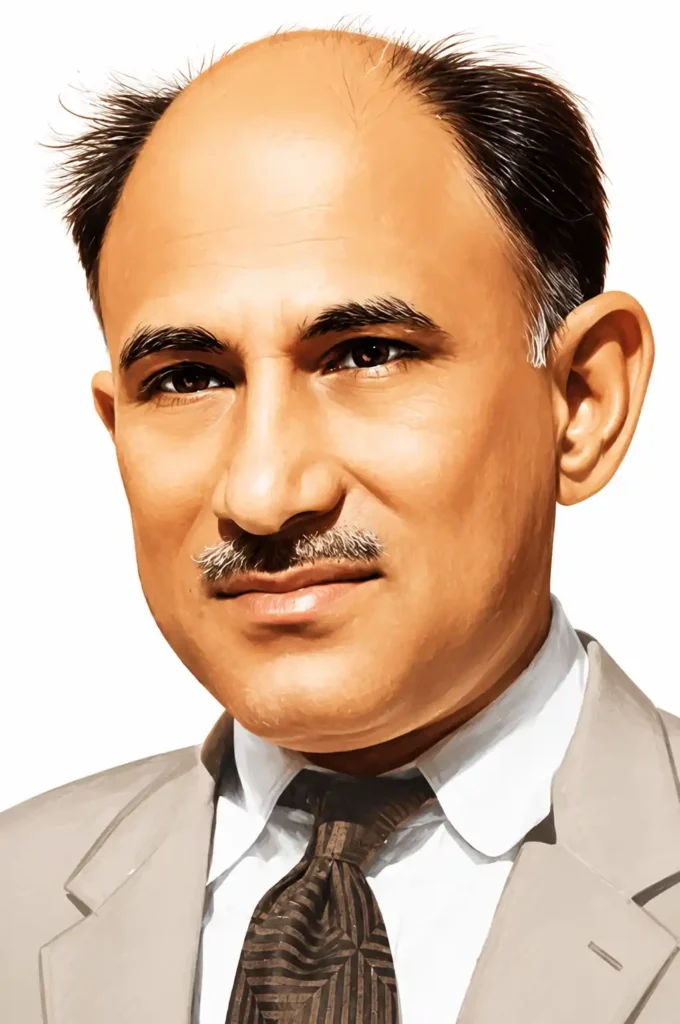
Khwaja Ahmad Abbas, popularly known as K.A. Abbas, was born on 7 June 1914 in Panipat. He was a famous Indian writer, journalist, novelist, screenwriter, and film director who wrote in Urdu, Hindi, and English. Abbas was known for writing stories that highlighted social issues such as poverty, equality, education, and justice. His simple yet powerful style made his works popular among readers of all ages. He also wrote scripts for many successful Hindi films and made significant contributions to Indian cinema. His inspiring story “Bholi” teaches the importance of education, self-confidence, courage, and self-respect. K.A. Abbas passed away on 1 June 1987 in Mumbai, but his literary works continue to inspire readers across the country.
2. Summary of the story Bholi
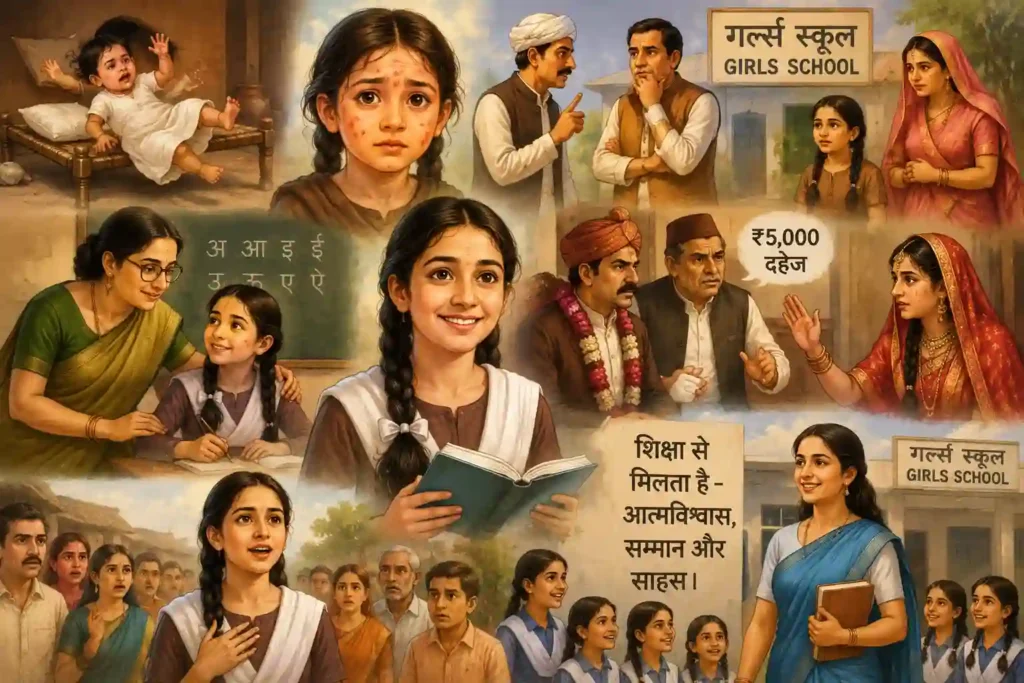
“Bholi” is a heart-touching story written by Khwaja Ahmad Abbas (K.A. Abbas). It tells the story of Sulekha, a simple and innocent girl who was lovingly called Bholi. When she was a baby, she fell from her cot and suffered a brain injury, because of which she stammered while speaking. Later, she also got smallpox, which left dark pockmarks on her face. Because of her appearance and speech problem, people laughed at her and thought she was not intelligent. Her parents, especially her father Ramlal, worried that no one would marry her. One day, when a new girls’ school opened in the village, the Tehsildar advised Ramlal to send his daughters to school. Although Bholi’s mother did not like the idea, she agreed to send Bholi because they believed she had little chance of getting married. At first, Bholi was afraid of school, but her kind and caring teacher welcomed her with love and patience. She encouraged Bholi to study, speak confidently, and believe in herself. Slowly, education changed Bholi’s life. She became confident, intelligent, and overcame her fear of speaking. Years later, a marriage was arranged with Bishamber Nath, an old and limping man. During the wedding, he saw the pockmarks on Bholi’s face and demanded ₹5,000 as dowry before agreeing to marry her. Although her father arranged the money, Bholi bravely refused to marry such a greedy man. Everyone was shocked to hear her speak clearly and confidently without stammering. Bishamber Nath left in anger, but Bholi stood firm. She promised to look after her parents and decided to become a teacher in the same school that had changed her life. The story beautifully shows that education gives confidence, self-respect, and courage, and that a person’s true worth is not judged by appearance but by character and self-confidence.
3. Word Meanings
| Word | Meaning |
| Stammer | To speak with repeated pauses or difficulty |
| Pockmarks | Small permanent scars left after smallpox |
| Mock | To make fun of someone |
| Dull | Slow to understand or learn |
| Elated | Very happy and excited |
| Assurance | A feeling of confidence or certainty |
| Prospective | Expected or likely in the future |
| Alliance | Marriage agreement between two families |
| Envious | Jealous of another person’s success or happiness |
| Pomp | Grand display or celebration |
| Veil | A cloth covering the bride’s face |
| Dowry | Money or gifts given by the bride’s family to the groom |
| Greedy | Wanting more money or things than needed |
| Courage | The ability to face fear bravely |
| Dignity | Self-respect and honour |
4. NCERT Solutions
4A. Think About It
1. Bholi had many apprehensions about going to school. What made her feel that she was going to a better place than her home?
Ans: Bholi was frightened when she first heard that she had to go to school because she had never been there before. She thought that her parents might be sending her away forever. However, on the day she was taken to school, her mother bathed her, dressed her in clean clothes, and tied ribbons in her hair. This made Bholi feel special because she had never received such attention at home. When she reached the school, she saw many girls of her age, colourful classrooms, and a warm, friendly atmosphere. Most importantly, her teacher welcomed her with a kind smile and spoke to her gently instead of laughing at her. For the first time in her life, Bholi felt loved, respected, and accepted. She realised that school was a place where people cared for her, and she believed it was much better than her home, where she had always been ignored and insulted.
2. How did Bholi’s teacher play an important role in changing the course of her life?
Ans: Bholi’s teacher played the most important role in changing her life. Unlike others, she never laughed at Bholi’s stammering or her appearance. Instead, she treated her with kindness, patience, and respect. She encouraged Bholi to speak slowly and confidently and praised her efforts. She gave her books with colourful pictures to develop her interest in learning and assured her that regular practice would help her overcome her speech problem. The teacher also inspired Bholi to believe in herself and made her realise that education could change her future. Because of her teacher’s love and encouragement, Bholi gained confidence, became educated, and learned to stand up for her rights. Finally, she refused to marry a greedy man and decided to become a teacher herself, proving that one caring teacher can completely transform a student’s life.
3. Why did Bholi at first agree to an unequal match? Why did she later reject the marriage? What does this tell us about her?
Ans: At first, Bholi agreed to marry Bishamber Nath because she trusted her parents’ decision and believed that marriage was her duty. Since she had been treated as a burden throughout her childhood, she never expected to make her own choices. She also thought that no one else would marry her because of her pockmarked face and speech problem. However, during the wedding ceremony, Bishamber Nath demanded five thousand rupees as dowry after seeing the scars on her face. His greedy and insulting behaviour opened Bholi’s eyes. She realised that such a man did not deserve her respect. Therefore, she courageously refused to marry him, even though everyone was shocked. This decision shows that Bholi had become educated, confident, independent, and self-respecting. She valued her dignity more than marriage and proved that true strength comes from education and self-belief.
4. Bholi’s real name is Sulekha. We are told this right at the beginning. But only in the last but one paragraph of the story is Bholi called Sulekha again. Why do you think she is called Sulekha at that point in the story?
Ans: At the beginning of the story, everyone calls Sulekha “Bholi,” which means a simple and innocent girl. The name reflects how people see her—as weak, foolish, and incapable. However, in the last part of the story, she is once again called “Sulekha” because she has completely changed as a person. She is no longer the frightened girl who could not even speak her name properly. She has become an educated, confident, and courageous young woman who can stand up against injustice. By refusing to marry a greedy man, she earns the respect of everyone around her. The author uses her real name, Sulekha, to show that she has discovered her true identity and dignity. It symbolises her transformation from a helpless child into a strong and self-confident woman.
5. Bholi’s story must have moved you. Do you think girl children are not treated at par with boys? You are aware that the government has introduced a scheme to save the girl child as the sex ratio is declining. The scheme is called Beti Bachao Beti Padhao, Save the Girl Child. Read about the scheme and design a poster in groups of four and display on the school notice board.
Ans: Yes, Bholi’s story is deeply moving and reminds us that many girls are still not treated equally in society. In some families, boys are given better education, healthcare, and opportunities, while girls face discrimination and are often considered a burden. Although the situation has improved in many places, gender inequality still exists. To change this, the Government of India launched the Beti Bachao Beti Padhao campaign, which aims to protect, educate, and empower girls. The scheme encourages parents to value daughters, ensure their education, and provide equal opportunities for their growth. Every child, whether a boy or a girl, deserves equal love, respect, and chances to succeed. Society can become stronger only when girls are educated, safe, and treated with dignity.
4B. Talk about it
1. Bholi’s teacher helped her overcome social barriers by encouraging and motivating her. How do you think you can contribute towards changing the social attitudes illustrated in this story?
Ans: I can help change such social attitudes by treating everyone with kindness and respect, regardless of their appearance, background, or abilities. I will never make fun of people with disabilities or speech problems. Instead, I will encourage them and help them feel confident. I will support equal education for girls and boys and speak against social evils such as dowry and gender discrimination. I can also spread awareness through discussions, posters, school activities, and social media. By appreciating people for their character rather than their appearance, I can help create a more caring and equal society.
2. Should girls be aware of their rights, and assert them? Should girls and boys have the same rights, duties and privileges? What are some of the ways in which society treats them differently? When we speak of ‘human rights’, do we differentiate between girls’ rights and boys’ rights?
Ans: Yes, girls should be fully aware of their rights and should confidently stand up for them whenever necessary. Girls and boys deserve equal rights, duties, opportunities, and privileges because both are equally important members of society. Unfortunately, in some places, girls still face discrimination in education, career choices, property rights, and personal freedom. Boys are often given more independence and encouragement. However, human rights belong to every person without any discrimination based on gender. There should be no difference between girls’ rights and boys’ rights. Equal treatment creates a fair, peaceful, and progressive society.
3. Do you think the characters in the story were speaking to each other in English? If not, in which language were they speaking? (You can get clues from the names of the persons and the non-English words used in the story.)
Ans: No, the characters in the story were not actually speaking in English. The story is written in English only for the readers. Since the story is set in a village in northern India and includes names such as Ramlal, Bholi, Bishamber Nath, and Tehsildar, it is clear that the characters were most likely speaking Hindi, Urdu, or a local regional dialect. The use of words like “Tehsildar” and the cultural background also suggest that their conversations took place in one of these Indian languages. The English version is simply a translation that allows readers from different backgrounds to understand and enjoy the story.
5. Extra Questions and Answers of the poem Bholi
5A. Multiple Choice Questions (MCQs)
1. Why was Sulekha called “Bholi”?
a) She was very clever.
b) She was simple and innocent.
c) She was the eldest daughter.
d) She was very talkative.
Ans: b) She was simple and innocent.
2. What caused Bholi to stammer?
a) A serious illness
b) A road accident
c) She fell from her cot as a baby.
d) A school injury
Ans: c) She fell from her cot as a baby.
3. Which disease left permanent marks on Bholi’s face?
a) Chickenpox
b) Measles
c) Smallpox
d) Malaria
Ans: c) Smallpox
4. How many children did Ramlal have?
a) Five
b) Six
c) Seven
d) Eight
Ans: c) Seven
5. What was Ramlal’s occupation?
a) Farmer
b) Shopkeeper
c) Numberdar (village headman)
d) Teacher
Ans: c) Numberdar
6. Who advised Ramlal to send his daughters to school?
a) The village doctor
b) The headmaster
c) The Tehsildar
d) The Sarpanch
Ans: c) The Tehsildar
7. Why did Bishamber Nath demand dowry?
a) He wanted a new house.
b) He saw the pockmarks on Bholi’s face.
c) He was poor.
d) He wanted jewellery.
Ans: b) He saw the pockmarks on Bholi’s face.
8. How much dowry did Bishamber Nath demand?
a) ₹2,000
b) ₹3,000
c) ₹5,000
d) ₹10,000
Ans: c) ₹5,000
9. Assertion (A): Bholi became confident after joining school.
Reason (R): Her teacher encouraged and motivated her.
a) Both A and R are true, and R is the correct explanation of A.
b) Both A and R are true, but R is not the correct explanation of A.
c) A is true, but R is false.
d) A is false, but R is true.
Ans: a) Both A and R are true, and R is the correct explanation of A.
10. Assertion (A): Bholi accepted dowry as a good custom.
Reason (R): She believed dowry was necessary for marriage.
a) Both A and R are true.
b) A is true, but R is false.
c) A is false, but R is true.
d) Both A and R are false.
\Ans: d) Both A and R are false.
11. Assertion (A): Education transformed Bholi’s personality.
Reason (R): It gave her confidence and self-respect.
a) Both A and R are true, and R is the correct explanation of A.
b) Both A and R are true, but R is not the correct explanation of A.
c) A is true, but R is false.
d) A is false, but R is true.
Ans: c) A is true, but R is false.
12. Which character is mainly responsible for Bholi’s transformation?
a) Ramlal
b) Bishamber Nath
c) Bholi’s teacher
d) Radha
Ans: c) Bholi’s teacher
13. Why is the title “Bholi” appropriate?
a) It shows that Bholi remains foolish throughout her life.
b) It highlights her journey from innocence to confidence.
c) It refers to her physical appearance.
d) It describes her family.
Ans: b) It highlights her journey from innocence to confidence.
14. Which value does Bholi’s final decision teach us?
a) Greed
b) Blind obedience
c) Self-confidence and dignity
d) Pride
Ans: c) Self-confidence and dignity
5B. Fill in the blanks
1. Bholi’s real name was __________. (Sulekha)
2. Bholi’s teacher spoke to her with __________ and kindness. (love)
3. The teacher gave Bholi books with __________. (pictures)
4. Education gave Bholi __________ and self-respect. (confidence)
5. Bholi’s bridegroom was __________ Nath. (Bishamber)
6. Bishamber Nath demanded __________ as dowry. (₹5,000)
7. Bholi refused to marry the groom because he was __________. (greedy)
8. Bholi decided to become a __________. (teacher)
9. Bholi promised to look after her __________ in their old age. (parents)
10. The story teaches the importance of __________. (education)
11. Bholi became a __________ young woman by the end of the story. (confident)
12. The story strongly condemns the __________ system. (dowry)
13. The teacher asked Bholi to come to school __________. (regularly)
5C. True or False
1. Bholi’s real name was Sulekha. (True)
2. Bholi was a confident speaker from childhood. (False)
3. Bholi started stammering after falling from her cot. (True)
4. Smallpox spoiled Bholi’s beautiful face. (True)
5. Ramlal had six children. (False)
6. Bholi was the youngest daughter of the family. (True)
7. The Tehsildar advised Ramlal to educate his daughters. (True)
8. Ramlal immediately refused to give the dowry. (False)
9. Bholi decided to become a teacher after the wedding incident. (True)
10. Bholi promised to take care of her parents throughout their old age. (True)
11. The story supports the practice of dowry. (False)
12. Bholi’s teacher played an important role in her transformation. (True)
13. The story teaches that physical beauty is more important than character. (False)
5D. One-sentence questions and answers
1. What kind of person was Bholi at the beginning of the story?
Ans: Bholi was a shy, timid, and simple girl who lacked confidence because she stammered and believed that she was unwanted.
2. Why did Bholi refuse to marry Bishamber?
Ans: Bholi refused to marry Bishamber because he demanded dowry and insulted her father for not giving enough money.
3. How did education change Bholi’s life?
Ans: Education changed Bholi’s life by giving her confidence, self-respect, and the courage to speak the truth and fight against injustice.
4. Why did Bholi’s parents decide to send her to school?
Ans: Bholi’s parents decided to send her to school because they thought that no one would marry her due to her appearance and stammering.
5. What promise did Bholi make at the end of the story?
Ans: Bholi promised to take care of her parents in their old age and to become a teacher like her kind and loving teacher.
6. What is the main theme of the story “Bholi”?
Ans: The main theme of the story “Bholi” is that education gives confidence, self-respect, and the strength to fight against social evils like the dowry system.
7. How did Bholi change by the end of the story?
Ans: By the end of the story, Bholi became an educated, confident, and self-respecting young woman who could make her own decisions and stand against injustice.
8. What social evil is highlighted in the story?
Ans: The story highlights the social evil of the dowry system and shows how greed and discrimination make society unfair to girls.
9. What message does the story give about education?
Ans: The story teaches that education gives confidence, self-respect, and courage to overcome fear and fight against injustice.
10. Why is the title “Bholi” appropriate?
Ans: The title “Bholi” is appropriate because it reflects the innocent nature of the main character and her journey from a timid girl to a confident young woman.
11. Describe the character of Bholi in brief.
Ans: Bholi is innocent, kind, hardworking, and courageous, and she becomes confident and independent through the power of education.
12. Describe the character of Bholi’s teacher.
Ans: Bholi’s teacher is kind, patient, loving, and encouraging, and she helps Bholi gain confidence and become a strong and independent person.
13. What lesson do you learn from Bholi?
Ans: The story “Bholi” teaches us to value education, respect every person, and oppose social evils like the dowry system with courage and self-respect.
14. Why is Bholi an inspiring character?
Ans: Bholi is an inspiring character because she overcomes her fear, gains confidence through education, and bravely refuses to accept injustice.
15. How does the story end?
Ans: The story ends with Bholi refusing to marry the greedy groom and deciding to serve her parents and become a teacher with confidence and self-respect.
5E. Short Questions and Answers
1. Why was Sulekha called Bholi?
Ans: Sulekha was called Bholi because she was simple, innocent, and slow in speaking. After falling from her cot as a baby, she developed a stammer, and later, smallpox left deep pockmarks on her face. People thought she was dull and began calling her “Bholi,” which means a simple-minded person. However, she later proved that she was intelligent, brave, and capable through the power of education.
2. What happened to Bholi when she was ten months old?
Ans: Bholi fell from her cot when she was only ten months old and suffered a brain injury. After this accident, she started stammering whenever she spoke, which made it difficult for her to express herself. People often laughed at her speech, and this made her lose confidence and become shy and fearful throughout her childhood.
3. How did smallpox affect Bholi?
Ans: Smallpox left deep pockmarks on Bholi’s face and spoiled her physical beauty. Because of these scars, people judged her by her appearance and often made fun of her. Her parents also became worried that no one would agree to marry her, which made them anxious about her future and happiness.
4. Why did Bholi’s parents worry about her future?
Ans: Bholi’s parents worried about her future because she stammered while speaking and had pockmarks on her face. They believed that no one would accept her as a bride because of these problems. They considered her a burden and remained anxious about her marriage and future life.
5. Why did Ramlal decide to send Bholi to school?
Ans: Ramlal decided to send Bholi to school after the Tehsildar advised him to educate his daughters. His wife also agreed because they believed that Bholi had very little chance of getting married. Although they sent her to school without much hope, education completely changed her life by giving her confidence and self-respect.
6. Why was Bholi afraid of going to school?
Ans: Bholi was afraid of going to school because she had never heard about it before. When her parents dressed her in clean clothes and took her out of the house, she thought they were sending her away forever. She felt frightened, confused, and helpless because she did not know what was going to happen.
7. What made Bholi feel happy on her first day at school?
Ans: Bholi felt happy on her first day at school because she saw many girls of her own age and liked the colourful pictures on the classroom walls. Her kind and loving teacher welcomed her with a smile and spoke gently to her. This made Bholi feel safe, comfortable, and hopeful about learning.
8. Why did the girls laugh at Bholi?
Ans: The girls in the classroom laughed at Bholi because she stammered while trying to tell her name. Their laughter made her feel ashamed and hurt, and she started crying. She believed that no one would ever become her friend because of her speech problem.
9. How did Bholi’s teacher encourage her?
Ans: Bholi’s teacher encouraged her by speaking kindly and asking her to say her name again without fear. She gave Bholi picture books, praised her efforts, and assured her that regular study would help her speak confidently. Her love, patience, and encouragement filled Bholi with hope and self-confidence.
10. Why was Bholi’s teacher different from others?
Ans: Bholi’s teacher was different from others because she never laughed at Bholi’s appearance or stammer. Instead, she treated her with kindness, patience, and respect. She believed in Bholi’s abilities and inspired her to become educated, confident, and independent through the power of education.
11. How did education change Bholi’s life?
Ans: Education transformed Bholi into a confident, educated, and self-respecting young woman. It helped her overcome her fear and speak without hesitation. Education also gave her the courage to think independently, make her own decisions, and stand against social evils like the dowry system.
12. Who was Bishamber Nath?
Ans: Bishamber Nath was the man chosen to marry Bholi. He was an old, limping man with grown-up children and was much older than Bholi. Although he was not a suitable match for her, Bholi’s parents accepted the proposal because they believed he was financially secure and willing to marry their daughter.
13. Why did Bholi agree to marry Bishamber Nath at first?
Ans: Bholi agreed to marry Bishamber Nath because she respected her parents’ decision and believed it was her duty to obey them. She also thought that no one else would agree to marry her because of her stammer and pockmarked face. Therefore, she accepted the proposal without any complaint.
14. Why did Bishamber Nath demand dowry?
Ans: Bishamber Nath demanded dowry when he noticed the pockmarks on Bholi’s face during the wedding ceremony. He asked for five thousand rupees before agreeing to marry her. His demand clearly showed his greed, selfishness, and lack of respect for Bholi and her family.
15. How did Ramlal react to the groom’s demand?
Ans: Ramlal felt deeply ashamed and helpless when Bishamber Nath demanded dowry at the wedding. He feared that the marriage would be cancelled and that his family’s honour would be ruined. Therefore, he somehow arranged five thousand rupees and offered the money to save the marriage.
16. Why did Bholi refuse to marry Bishamber Nath?
Ans: Bholi refused to marry Bishamber Nath because he insulted her and her family by demanding dowry after seeing her face. She realised that he was a greedy and selfish man who did not respect her. She valued her self-respect more than marriage and bravely rejected him in front of everyone.
17. How did the people at the wedding react to Bholi’s decision?
Ans: The people present at the wedding were shocked when Bholi refused to marry the groom. They were surprised to hear her speak clearly and confidently without stammering. Many of them admired her courage and realised that education had completely transformed her personality.
18. What promise did Bholi make to her parents?
Ans: Bholi promised her parents that she would never leave them alone in their old age. She assured them that she would take care of them with love and respect instead of marrying a greedy man. Her promise showed her sense of responsibility, gratitude, and affection for her parents.
19. Why did Bholi decide to become a teacher?
Ans: Bholi decided to become a teacher because her own teacher had changed her life through love, kindness, and education. She wanted to help other children who lacked confidence and give them the same support that she had received. She believed that education could transform the lives of many people.
20. Why was Bholi’s teacher proud of her?
Ans: Bholi’s teacher was proud because Bholi had grown into a confident, educated, and courageous young woman. She bravely stood against the dowry system and refused to marry a greedy man. Her teacher felt happy because Bholi had learnt the true values of education, self-respect, and independence.
5F. Long Questions and Answers
1. Describe the character of Bholi.
Ans: Bholi, whose real name was Sulekha, is the central character of the story. She is introduced as a simple, innocent, and neglected girl. When she was only ten months old, she fell from her cot, which affected her brain and caused her to stammer. Later, she suffered from smallpox, leaving deep pockmarks on her face. Because of these problems, people laughed at her, considered her dull, and treated her with little love or respect. Even her parents believed that she would never find a suitable husband. However, her life changed when she was sent to school. There she met a kind and caring teacher who encouraged her with patience and affection. The teacher gave her confidence, taught her to speak without fear, and inspired her to believe in herself. Through education, Bholi gradually became intelligent, independent, and courageous. The greatest proof of her transformation came on her wedding day when she refused to marry Bishamber Nath after he demanded dowry. She valued her dignity more than marriage and bravely opposed social injustice. She later decided to become a teacher and care for her parents. Bholi’s character develops from a frightened and helpless girl into a confident, self-respecting, and educated woman. She proves that education and encouragement can completely change a person’s life and make them capable of standing against injustice.
2. How did Bholi’s teacher transform her life?
Ans: Bholi’s teacher played the most important role in changing her life. Before joining school, Bholi was timid, lonely, and lacked confidence because everyone laughed at her stammer and pockmarked face. She believed that nobody loved or respected her. On her very first day at school, when the girls laughed at her for stammering while telling her name, she became frightened and started crying. Instead of scolding or insulting her, the teacher spoke kindly, comforted her, and encouraged her to speak again without fear. She assured Bholi that regular practice would help her overcome her speech problem. The teacher also gave her picture books and inspired her to attend school every day. More importantly, she made Bholi believe in her own abilities and taught her the value of education. As the years passed, Bholi became confident, educated, and capable of making wise decisions. On her wedding day, she fearlessly rejected a greedy groom who demanded dowry. This courage was the direct result of the confidence her teacher had built in her. Finally, Bholi decided to become a teacher herself so that she could help other children. The story shows that a caring and understanding teacher can inspire students, remove their fears, and completely transform their lives.
3. Why did Bholi refuse to marry Bishamber Nath? What does her decision reveal about her personality?
Ans: At first, Bholi accepted the marriage because she respected her parents’ decision and believed that she should obey them. Since she had been neglected throughout her childhood because of her stammer and scarred face, she never expected to choose her own future. Her parents were happy because they believed that no one else would agree to marry her. However, during the wedding ceremony, Bishamber Nath saw the pockmarks on Bholi’s face and immediately demanded five thousand rupees as dowry before completing the marriage. Although her father somehow arranged the money to save the family’s honour, Bholi understood that the groom was greedy, selfish, and lacked respect for her. She realised that a man who demanded money instead of valuing human dignity would never make her happy. Therefore, she boldly refused to marry him in front of everyone. Her clear and confident speech surprised the entire gathering because she no longer stammered or feared public opinion. Her decision reveals that she had become courageous, self-respecting, independent, and capable of fighting injustice. She chose dignity over social pressure and proved that education had given her the confidence to stand for what was right. Her refusal became a powerful protest against the evil practice of dowry.
4. Discuss the importance of education in the story “Bholi”.
Ans: Education is the most important theme of the story because it changes Bholi’s entire life. At the beginning, she is a shy and frightened girl who suffers because of her speech problem and facial scars. She has no confidence and believes that she is unwanted. Society judges her only by her appearance and considers her a burden. Everything changes after she joins school. Her teacher treats her with kindness, encourages her to speak confidently, and gives her hope for a better future. Gradually, Bholi learns to read, write, and express her thoughts without fear. More importantly, education teaches her self-respect, courage, and independent thinking. It helps her understand that she deserves equal respect and should never accept injustice. The greatest result of her education is seen when she refuses to marry a greedy man who demands dowry. Instead of remaining silent, she speaks boldly and protects her dignity. She also decides to become a teacher so that she can educate and inspire other children. Through Bholi’s transformation, the author clearly shows that education is not only a source of knowledge but also a means of building confidence and character. It empowers people to fight discrimination, make wise decisions, and live with honour and self-respect.
5. “Bholi is a story of courage, self-respect, and women’s empowerment.” Justify the statement.
Ans: “Bholi” is truly a story of courage, self-respect, and women’s empowerment because it shows how education can completely change a person’s life. At the beginning, Bholi is ignored and insulted because she stammers and has pockmarks on her face. Her family believes she will never find a husband, and society treats her as a burden. However, after joining school, she receives love, encouragement, and education from her teacher. These qualities slowly remove her fear and build her confidence. The most important moment in the story comes during her wedding when Bishamber Nath demands five thousand rupees as dowry after seeing her face. Although her father is ready to pay the money, Bholi refuses to marry such a greedy and selfish man. She understands that self-respect is more valuable than marriage. Her bold decision shocks everyone because the same girl who once could not even speak properly now stands firmly against injustice. She also chooses to become a teacher and support her parents instead of depending on others. Her transformation reflects the true meaning of women’s empowerment. The story teaches that every girl deserves education, respect, equal opportunities, and the freedom to make her own decisions. It also strongly condemns social evils like dowry and gender discrimination while promoting dignity, courage, and equality.
6. Describe Bholi’s journey from a neglected child to an independent woman.
Ans: Bholi’s journey from a neglected child to an independent woman is the main focus of the story. As a child, Bholi was ignored by everyone because she stammered and had pockmarks on her face caused by smallpox. Her family believed that she was not as intelligent or beautiful as her sisters, so she received very little love and attention. People laughed at her, and she grew up feeling lonely and helpless. Her life took a new direction when she was sent to school. At first, she was frightened because she had never been to school before. However, her kind teacher welcomed her warmly, encouraged her to speak confidently, and inspired her to study sincerely. With regular education and constant motivation, Bholi gradually became confident and learned to value herself. She realised that every person deserves respect regardless of appearance. The greatest change in her character appeared on her wedding day when she refused to marry Bishamber Nath after he demanded dowry. She boldly rejected the marriage and protected her dignity. Instead of depending on marriage for her future, she decided to become a teacher and take care of her parents. Her inspiring journey proves that education, confidence, and determination can help anyone overcome difficulties and become an independent and respected person.
7. How does the story ‘Bholi’ expose the evil of the dowry system?
Ans: The story strongly criticises the evil practice of the dowry system through the events of Bholi’s wedding. Bholi’s parents believed they were fortunate to find a groom because they thought no one would marry their daughter due to her stammer and pockmarked face. Bishamber Nath appeared willing to marry her, but his true nature was revealed during the wedding ceremony. As soon as he saw the scars on Bholi’s face, he demanded five thousand rupees as dowry before agreeing to complete the marriage. This showed that he valued money more than human dignity. Ramlal felt helpless and arranged the money to save the family’s honour, showing how social pressure forces parents to accept injustice. However, Bholi refused to marry such a greedy and selfish man. Her bold decision exposed the cruelty and unfairness of the dowry system. She proved that self-respect is more important than marriage and wealth. Through this incident, the author conveys a powerful message that dowry is a social evil that destroys relationships and humiliates women. The story encourages readers to reject such practices and build a society based on equality, respect, and human values rather than money.
8. How does the author show the importance of self-respect through Bholi’s character?
Ans: Self-respect is one of the strongest themes of the story, and the author beautifully presents it through Bholi’s actions. At the beginning, Bholi is timid and lacks confidence because people constantly insult her due to her speech problem and facial scars. She quietly accepts every insult because she believes she has little value. However, after receiving education and encouragement from her teacher, she develops confidence and learns to respect herself. The real test of her character comes during her wedding when Bishamber Nath demands dowry after seeing the pockmarks on her face. Although her father agrees to pay the money, Bholi understands that the groom has insulted her dignity. She bravely refuses to marry him because she knows that a greedy man cannot give her respect or happiness. Her decision shocks everyone present, but she remains firm because she values her self-respect above social approval. She also chooses to become a teacher instead of depending on an unfair marriage. Through Bholi’s transformation, the author teaches that every person should protect their dignity and never accept humiliation or injustice. Self-respect gives people the courage to make the right decisions and live honourably.
9. Give a detailed character sketch of Bishamber Nath.
Ans: Bishamber Nath is the bridegroom selected for Bholi, and he represents greed, selfishness, and social hypocrisy. He is an old, limping man with grown-up children and is almost the same age as Bholi’s father. Although he agrees to marry Bholi, his true character is revealed during the wedding ceremony. When someone lifts Bholi’s veil and he notices the pockmarks on her face, he immediately demands five thousand rupees as dowry. This proves that he is interested only in money and not in human values. He is willing to insult the bride and her family for personal gain. Even after Ramlal arranges the money, Bishamber Nath loses all respect because his greed becomes known to everyone. His behaviour shows that he lacks kindness, honesty, and compassion. He considers marriage a business transaction rather than a sacred relationship based on love and respect. Finally, Bholi refuses to marry him, and he returns home humiliated. Through Bishamber Nath’s character, the author strongly criticises the dowry system and warns society against judging people by their appearance or treating marriage as a means of earning money.
10. What are the major themes of the story ‘Bholi’? Explain.
Ans: The story ‘Bholi’ presents several important themes that are relevant even today. The most important theme is the power of education. Bholi changes from a timid and neglected girl into a confident and independent woman because of education and the encouragement of her teacher. Another important theme is self-respect. Bholi refuses to marry a greedy groom because she values her dignity more than social approval. The story also condemns the dowry system by showing how Bishamber Nath demands money after seeing Bholi’s scarred face. Women’s empowerment is another major theme because Bholi gains the courage to make her own decisions and chooses a life of independence instead of accepting injustice. The story also highlights the importance of kindness and encouragement through the role of Bholi’s teacher, whose love and patience completely transform her student. Finally, the author teaches that people should never be judged by their physical appearance but by their character, values, and abilities. Through these themes, the story gives a powerful message that education, equality, confidence, and self-respect are the true foundations of a happy and meaningful life.
Related Links
- Class 10 History Chapter 5: Print Culture and the Modern World Q&A
- Class 10 History Chapter 4: The Age of Industrialization Q&A
- Class 10 History Chapter 3: The Making of a Global World Q&A
- CBSE Class 10 History Chapter 2 Nationalism in India Questions and Answers
- CBSE 10 History Event and Processes Questions and Answers
- CBSE 10 Economics Consumer Rights Questions and Answers
- CBSE 10 Economics Globalisation and the Indian Economy Questions and Answers
- CBSE 10 Economics Money and Credit Questions and Answers
- CBSE 10 Economics Sectors of the Indian Economy Questions and Answers
- CBSE 10 Economics Development Questions and Answers