
The Midnight Visitor Solutions and Questions & Answers
Content Structure
- 1. About the author – Robert Arthur
- 2. Summary of the story The Midnight Visitor
- 3. Word meanings
- 4. NCERT Solutions
- 4A. Think about it
- 4B. Talk about it
- 5. Extra Questions and Answers of the poem The Midnight Visitor
- 5A. Multiple Choice Questions (MCQs)
- 5B. Fill in the blanks
- 5C. True and false
- 5D. One-sentence questions and answers
- 5E. Short Questions and Answers
- 5F. Long Questions and Answers
1. About the author – Robert Arthur

About the Author: Robert Arthur was a famous American writer and editor who was best known for writing mystery, detective, and adventure stories for young readers. He was born on November 10, 1909. His stories are full of suspense, clever ideas, and surprising endings, making them exciting to read. He also edited many popular collections of mystery stories and encouraged children to develop a love for reading. He passed away on May 2, 1969. His story “The Midnight Visitor” remains one of his most popular works.
2. Summary of the story The Midnight Visitor
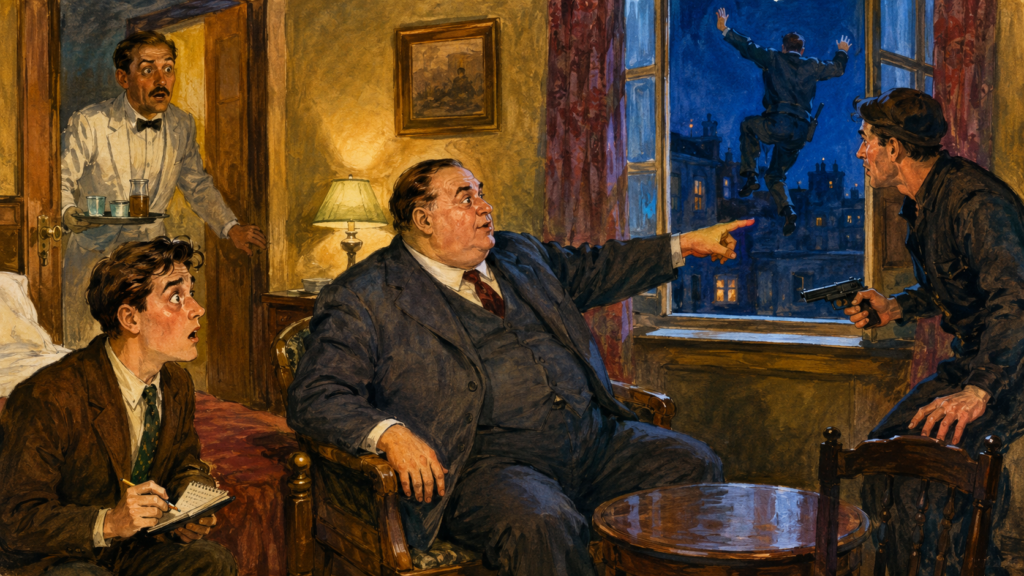
The Midnight Visitor is an exciting detective story written by Robert Arthur. It tells how intelligence and presence of mind can be more powerful than physical strength. The story revolves around Ausable, a secret agent, and Fowler, a young writer who wishes to experience the thrilling life of a spy. Fowler expects Ausable to be a tall, smart, and adventurous man. Instead, he is disappointed to find that Ausable is overweight, speaks with an American accent, and looks quite ordinary. When they enter Ausable’s hotel room, they are shocked to discover Max, another secret agent, waiting inside with a gun. Max has come to steal an important report containing details about new missiles. Fowler becomes frightened because he has never faced such danger before. However, Ausable remains calm and thinks quickly. He tells Max that the hotel room has a balcony outside the window, although no such balcony actually exists. At the same time, someone knocks at the door. Ausable cleverly claims that it must be the police, whom he had called for protection. Afraid of being caught by the police, Max decides to hide on the “balcony” until they leave. Believing Ausable’s story, he jumps out of the window and falls to his death because there is no balcony outside. The person at the door turns out to be a waiter bringing drinks. Fowler is amazed to realize that Ausable had invented both the story of the balcony and the arrival of the police to trick Max. The story highlights that a true secret agent does not always match the glamorous image people imagine. Intelligence, confidence, and quick thinking helped Ausable defeat a dangerous enemy and save himself and Fowler.
3. Word meanings
| Word | Meaning |
| Espionage | The activity of spying to obtain confidential information. |
| Accent | The particular way in which a person pronounces words. |
| Mysterious | Difficult to understand or explain; full of secrecy. |
| Intrigue | A secret plan or activity intended to achieve a goal. |
| Startled | Suddenly shocked or surprised. |
| Panic | Sudden uncontrollable fear. |
| Presence of Mind | The ability to think and act wisely in a difficult situation. |
| Deception | The act of making someone believe something that is not true. |
| Bewildered | Completely confused and unable to understand. |
| Grasp | To understand something clearly. |
| Frantically | In a hurried and desperate way. |
| Exploit | To make use of a situation to gain an advantage. |
| Triumph | A great victory or success. |
| Lurking | Waiting or hiding secretly, often with harmful intentions. |
| Assume | To think something is true without proof. |
| Slender | Thin and graceful in appearance. |
| Anxiety | A feeling of worry, nervousness, or unease. |
4. NCERT Solutions
4A. Think about it
1. “Ausable did not fit any description of a secret agent Fowler had ever read.” What do secret agents in books and films look like, in your opinion? Discuss in groups or in class some stories or movies featuring spies, detectives and secret agents, and compare their appearance with that of Ausable in this story. (You may mention characters from fiction in languages other than English. In English fiction you may have come across Sherlock Holmes, Hercule Poirot, or Miss Marple. Have you watched any movies featuring James Bond?)
Answer: Secret agents in books and films are usually shown as tall, smart, fit, brave, and well-dressed. They often carry weapons, perform dangerous missions, and look very confident. Characters like James Bond and Sherlock Holmes are famous for their intelligence and courage. Ausable, however, looks quite different. He is overweight, speaks with an American accent, and appears to be an ordinary man. Even though he does not look like a typical secret agent, he proves that intelligence and quick thinking are more important than appearance.
2. How does Ausable manage to make Max believe that there is a balcony attached to his room? Look back at his detailed description of it. What makes it a convincing story?
Answer: Ausable speaks confidently about the balcony as if it really exists. He even says that someone had entered his room through it before. His calm behaviour and detailed explanation make the story sound true. Max believes him because he has no reason to doubt Ausable.
3. Looking back at the story, when do you think Ausable thought up his plan for getting rid of Max? Do you think he had worked out his plan in detail right from the beginning? Or did he make up a plan taking advantage of events as they happened?
Answer: Ausable did not make the plan in advance. He quickly made up the story about the balcony when he saw Max in the room. When there was a knock at the door, he cleverly pretended that it was the police. He used the situation wisely to trick Max and save himself and Fowler.
4B. Talk about it
1. In this story, Ausable shows great ‘presence of mind,’ or the ability to think quickly, and act calmly and wisely, in a situation of danger and surprise. Give examples from your own experience, or narrate a story, which shows someone’s presence of mind.
Answer: One day, a small child slipped while crossing the road. A nearby man quickly pulled the child to safety before a vehicle reached him. Because he stayed calm and acted quickly, the child was saved. This shows the importance of presence of mind.
2. Discuss what you would do in the situations described below.
• A small fire starts in your kitchen.
Answer: I would switch off the gas, use a fire extinguisher or cover the fire with a wet cloth if it is safe. Then I would call for help.
• A child starts to choke on a piece of food.
Answer: I would call an adult immediately and give first aid if I know how. If needed, I would call an ambulance.
• An electrical appliance starts to hiss and gives out sparks.
Answer: I would switch off the main power supply without touching the appliance directly and ask an electrician to check it.
• A bicycle knocks down a pedestrian.
Answer: I would help the injured person, call for medical help if needed, and inform nearby adults.
• It rains continuously for more than twenty-four hours.
Answer: I would stay indoors, avoid flooded areas, keep emergency items ready, and follow the advice of local authorities.
• A member of your family does not return home at the usual or expected time.
Answer: I would try to contact the person by phone. If there is no response, I would inform other family members and seek help if necessary.
5. Extra Questions and Answers of the poem The Midnight Visitor
5A. Multiple Choice Questions (MCQs)
1. Who is the author of The Midnight Visitor?
a) Ruskin Bond
b) Robert Arthur
c) James Herriot
d) H.G. Wells
Ans: (b) Robert Arthur
2. Who was Fowler?
a) A detective
b) A waiter
c) A writer
d) A police officer
Ans: (c) A writer
3. In which city was Ausable living?
a) London
b) New York
c) Paris
d) Berlin
Ans: (c) Paris
4. On which floor was Ausable’s room located?
a) Third floor
b) Fourth floor
c) Fifth floor
d) Sixth floor
Ans: (d) Sixth floor
5. What did Fowler find when Ausable opened the room?
a) A thief stealing money
b) A waiter serving food
c) Max standing with a pistol
d) A police officer
Ans: (c) Max standing with a pistol
6. What was the report about?
a) New hotels
b) Trade agreements
c) Missiles
d) Military uniforms
Ans: (c) Missiles
7. How had Max entered Ausable’s room?
a) Through the window
b) By using a passkey
c) Through the balcony
d) Through the bathroom
Ans: (b) By using a passkey
8. What sound was heard at the door?
a) A gunshot
b) A loud knock
c) A scream
d) A telephone ringing
Ans: (b) A loud knock
9. Who did Ausable say was knocking at the door?
a) The hotel manager
b) The police
c) A journalist
d) Max’s friend
Ans: (b) The police
10. Where did Max try to hide?
a) Under the bed
b) In the bathroom
c) On the imaginary balcony
d) Behind the curtain
Ans: (c) On the imaginary balcony
11. What happened to Max?
a) He was arrested.
b) He escaped safely.
c) He jumped out of the window and fell.
d) He surrendered.
Ans: (c) He jumped out of the window and fell.
12. What quality of Ausable helped him defeat Max?
a) Physical strength
b) Wealth
c) Intelligence and presence of mind
d) Luck
Ans: (c) Intelligence and presence of mind
13. Which language did Ausable speak with an American accent?
a) Spanish and Italian
b) French and German
c) Russian and Chinese
d) Hindi and English
Ans: (b) French and German
14. What kind of hotel did Ausable stay in?
a) A luxurious palace hotel
b) A modern resort
c) A gloomy French hotel
d) A seaside hotel
Ans: (c) A gloomy French hotel
15. Assertion (A): Ausable was a successful secret agent.
Reason (R): He used intelligence and quick thinking to handle dangerous situations.
a) Both A and R are true, and R is the correct explanation of A.
b) Both A and R are true, but R is not the correct explanation of A.
c) A is true, but R is false.
d) A is false, but R is true.
Ans: (a) Both A and R are true, and R is the correct explanation of A.
16. If Ausable had panicked on seeing Max, what might have happened?
a) Max would have become his friend.
b) The situation could have become more dangerous.
c) Fowler would have laughed.
d) The waiter would have solved the problem.
Ans: (b) The situation could have become more dangerous.
5B. Fill in the Blanks
1. Fowler was a young __________ who had come to meet Ausable. (writer)
2. Ausable was a __________ agent. (secret)
3. His room was located on the __________ floor. (sixth)
4. Max was holding an automatic __________ when Fowler saw him. (pistol)
5. Max had entered Ausable’s room using a __________. (passkey)
6. Max wanted to obtain an important __________. (report)
7. The report contained information about new __________. (missiles)
8. Ausable invented a story about a _____ _____ outside the window. (balcony)
9. Someone gave a loud __________ at the door. (knock)
10. Ausable told Max that the __________ had arrived. (police)
5C. True or False
1. Fowler was a detective who worked with Ausable. (False)
2. Ausable looked exactly like the secret agents shown in films. (False)
3. Ausable lived in a gloomy French hotel. (True)
4. His hotel room was on the ground floor. (False)
5. Max entered the room with the help of a passkey. (True)
6. The balcony outside the window actually existed. (False)
7. A loud knock was heard at the door during the incident. (True)
8. Ausable said that the people at the door were police officers. (True)
9. Max hid under the bed to escape from the police. (False)
10. Max jumped out through the window believing in the imaginary balcony. (True)
5D. One-sentence questions and answers
1. Who was Fowler?
Ans: Fowler was a young writer who followed Ausable hoping to see the thrilling adventures of a real secret agent.
2. Why was Fowler disappointed when he met Ausable?
Ans: Fowler was disappointed because the overweight and ordinary-looking Ausable did not look like the handsome, adventurous spy he had imagined.
3. Who was Max?
Ans: Max was a young, confident rival secret agent who broke into Ausable’s room with a gun to steal an important report.
4. Why had Max come to Ausable’s room?
Ans: Max came to Ausable’s room to use his gun to steal a secret report about new missiles.
5. How had Max entered Ausable’s room?
Ans: Max secretly used a passkey to enter the room and wait with his gun.
6. What story did Ausable tell Max about the balcony?
Ans: Ausable told a believable lie that someone else had previously sneaked into his room through a balcony outside the window.
7. Why did Max decide to hide on the balcony?
Ans: Max decided to hide on the balcony to avoid being arrested after Ausable tricked him into believing the police were knocking at the door.
8. Who was actually knocking at the door?Ans: A hotel waiter was actually knocking at the door to deliver drinks that Ausable had ordered earlier.
9. What happened to Max in the end?
Ans: Max died after he jumped out of the sixth-floor window to hide on a balcony that did not actually exist.
10. How did Ausable defeat Max?
Ans: Ausable defeated Max using his intelligence by inventing stories about a balcony and the police to trick Max into jumping to his death.
11. What was Fowler’s first authentic thrill of the day?
Ans: Fowler’s first real thrill of the day happened when he saw Max pointing a gun at them inside Ausable’s room.
12. Why is Ausable called an unusual secret agent?
Ans: Ausable was considered unusual because he looked ordinary and overweight instead of matching the glamorous image of a typical spy.
13. What qualities of Ausable impressed Fowler?
Ans: Fowler was highly impressed by Ausable’s calmness, courage, and quick thinking during a life-threatening situation.
14. Why did Fowler admire Ausable at the end of the story?
Ans: Fowler admired Ausable at the end because he realized that true heroism comes from bravery and a sharp mind, not just physical looks.
15. What message does the story convey?
Ans: The story teaches us that quick thinking and intelligence are more powerful than weapons, and we should never judge someone by their appearance.
16. Why did Fowler call the incident his “first authentic thrill”?
Ans: Fowler called it his first real thrill because seeing a man pointing a gun at them finally gave him the exciting danger he expected from a spy’s life.
5E. Short Questions and Answers
1. Who was Fowler?
Ans: Fowler was a young writer who wanted to learn about the real life of a secret agent. He accompanied Ausable because he hoped to witness thrilling adventures, dangerous missions, and exciting incidents that he had only read about in books. However, as he spent time with Ausable, he realized that the life of a real spy was very different from his imagination. By the end of the story, Fowler understood that intelligence and quick thinking are far more important than physical appearance or dramatic action.
2. Why was Fowler disappointed when he met Ausable?
Ans: Fowler was disappointed because he had imagined a secret agent to be tall, handsome, smart, and full of energy. Instead, Ausable was overweight, spoke with an American accent, and looked like an ordinary man. He did not seem adventurous or heroic in any way. Fowler felt that Ausable did not fit the glamorous image of a spy that he had created in his mind. However, later events completely changed his opinion.
3. Who was Max?
Ans: Max was a rival secret agent who secretly entered Ausable’s hotel room carrying a pistol. He was young, confident, and determined to steal an important report about new missiles before Ausable could receive it. Max believed that by threatening Ausable, he could easily get the document. However, he underestimated Ausable’s intelligence and presence of mind, which eventually led to his own downfall.
4. What story did Ausable tell Max about the balcony?
Ans: Ausable calmly told Max that there was a balcony outside his hotel room window. He even claimed that someone had entered his room through it on an earlier occasion and complained about the poor security of the hotel. His detailed explanation and confident manner made the false story sound completely believable. Max accepted the lie without questioning it, which became an important part of Ausable’s clever plan.
5. Why did Max decide to hide on the balcony?
Ans: Max decided to hide on the balcony because Ausable convinced him that the police had arrived outside the room. Hearing a knock at the door, Max feared that he would be caught with a pistol. Believing that the balcony really existed, he thought it was the safest place to hide until the police had left. His fear and trust in Ausable’s story caused him to make a fatal mistake.
6. What happened to Max in the end?
Ans: In the end, Max believed Ausable’s story about the balcony and quickly jumped out of the window to escape from the supposed police. However, there was actually no balcony outside the room. As a result, Max fell from the sixth floor of the hotel and died. His own fear, haste, and failure to verify the truth led to his tragic end.
7. How did Ausable defeat Max?
Ans: Ausable defeated Max without using any weapon or physical force. Instead, he used his intelligence, confidence, and presence of mind to invent convincing stories about a balcony and the arrival of the police. Max believed every word because Ausable remained calm throughout the situation. Frightened by the imagined danger, Max jumped out of the window and caused his own downfall. Thus, Ausable proved that clever thinking can be more powerful than violence.
8. What qualities of Ausable impressed Fowler?
Ans: Ausable impressed Fowler with his calmness, confidence, courage, and quick thinking. Even though Max threatened him with a pistol, Ausable did not panic or lose control. Instead, he carefully planned a clever trick that fooled Max completely. Fowler realized that a real secret agent does not depend on physical strength but on intelligence and presence of mind. These qualities changed Fowler’s opinion of Ausable forever.
9. Why did Fowler admire Ausable at the end of the story?
Ans: Fowler admired Ausable because he finally understood what makes a true secret agent. At first, he judged Ausable by his appearance and thought he looked ordinary. However, after watching him handle a dangerous situation with intelligence and confidence, Fowler realized his mistake. Ausable’s clever plan saved both their lives without any violence. This completely changed Fowler’s opinion and filled him with admiration.
10. What message does the story convey?
Ans: The story conveys that intelligence, confidence, and presence of mind are often more powerful than physical strength or weapons. It teaches readers that people should never be judged by their outward appearance because true ability lies in character and intelligence. The story also shows that staying calm during difficult situations helps in making wise decisions and solving problems successfully.
11. Why did Fowler call the incident his “first authentic thrill”?
Ans: Fowler called the incident his “first authentic thrill” because, for the first time, he experienced real danger instead of imaginary adventure. When Max appeared suddenly with a pistol, Fowler realized that the situation was truly life-threatening. This was exactly the kind of excitement he had expected from the life of a secret agent. The incident showed him that real espionage involves genuine risks and unexpected situations.
12. How did Ausable use psychology to defeat Max?
Ans: Ausable defeated Max by using psychology instead of force. He understood that fear could make people act without thinking carefully. Therefore, he calmly invented the story of the balcony and claimed that the police had arrived outside the room. His confident behaviour made the lies seem believable. Frightened by the thought of being arrested, Max trusted Ausable’s words and made the fatal decision to jump through the window.
13. Explain the significance of the imaginary balcony in the story.
Ans: The imaginary balcony is the most important part of Ausable’s clever plan. Although it never existed, Ausable described it so convincingly that Max accepted it as the truth. When he believed the police were outside the room, Max tried to escape through the imaginary balcony and fell to his death. The incident highlights the power of intelligence, confidence, and quick thinking in overcoming dangerous situations.
14. Why is Ausable considered a true hero?
Ans: Ausable is considered a true hero because he remained calm and fearless even when faced with a dangerous criminal carrying a pistol. Instead of fighting or using violence, he relied on his intelligence and presence of mind. His clever plan not only protected himself but also saved Fowler from harm. Through his actions, Ausable proved that wisdom and courage are the greatest qualities of a real hero.
15. What role does confidence play in Ausable’s success?
Ans: Confidence plays a major role in Ausable’s success because it made his false stories sound completely true. He never showed fear or nervousness despite being threatened by an armed criminal. His calm voice and natural behaviour convinced Max that the balcony existed and that the police had arrived. Because of Ausable’s confidence, Max believed every word and fell into the trap without any suspicion.
16. Why can Max’s downfall be called self-created?
Ans: Max’s downfall can be called self-created because he caused his own death by making careless decisions. Instead of checking whether the balcony really existed, he blindly believed Ausable’s lies. His fear of the police and overconfidence in his own abilities prevented him from thinking logically. As a result, he jumped through the window and fell from the sixth floor. His own actions, rather than Ausable’s force, led to his end.
17. What change takes place in Fowler’s opinion of Ausable?
Ans: Fowler’s opinion of Ausable changes completely during the story. At first, he considers Ausable to be an ordinary and disappointing secret agent because of his appearance and behaviour. However, after witnessing Ausable’s intelligence, confidence, and clever handling of Max, Fowler realizes that he had judged him unfairly. By the end of the story, Fowler deeply admires Ausable and understands the true qualities of a successful spy.
18. How does Robert Arthur create suspense in the chapter?
Ans: Robert Arthur creates suspense through a series of unexpected events that keep readers curious and anxious. Max’s sudden appearance with a pistol creates immediate tension. Ausable’s invented story about the balcony, the mysterious knock at the door, and Max’s desperate attempt to escape all increase the excitement. These surprising twists keep readers wondering what will happen next until the story reaches its dramatic ending.
19. Why did Ausable not reveal his plan to Fowler?
Ans: Ausable did not reveal his plan to Fowler because he wanted Fowler’s reactions to remain natural and genuine. If Fowler had known about the imaginary balcony or the trick, his behaviour might have appeared unusual and made Max suspicious. Ausable understood that even a small mistake could ruin his plan. Therefore, he kept everything secret until the danger was over, ensuring that Max believed the entire story.
20. What lesson does Max’s death teach readers?
Ans: Max’s death teaches readers that fear, greed, and overconfidence can lead to serious consequences. He was so eager to steal the important report and so frightened of being caught that he failed to think carefully. Instead of checking the truth, he blindly trusted Ausable’s words. The story reminds us to remain calm, think wisely, and verify facts before making important decisions.
5F. Long Questions and Answers
1. “Appearances can be deceptive.” Explain this statement with reference to The Midnight Visitor.
Ans: The story strongly supports the idea that appearances can be deceptive. Fowler expects a secret agent to be handsome, athletic, and adventurous. When he meets Ausable, he feels disappointed because Ausable is overweight, ordinary-looking, and speaks with an American accent. However, when danger arises, Ausable displays remarkable intelligence and courage. Faced with an armed intruder, he remains calm and creates a clever plan to escape. By inventing stories about the balcony and the police, he tricks Max into jumping out of the window. On the other hand, Max appears to be the ideal secret agent—young, smart, and confident. Yet, he proves to be impatient and foolish enough to believe Ausable’s lies. The story teaches readers not to judge people by their appearance. True ability lies in qualities such as wisdom, confidence, and presence of mind rather than outward looks.
2. What is the central message of The Midnight Visitor? Explain.
Ans: The central message of The Midnight Visitor is that intelligence and quick thinking are more powerful than physical strength. The story also teaches that people should not be judged by their appearance. Ausable does not resemble the heroic secret agents portrayed in fiction. Nevertheless, he successfully handles a dangerous situation through calmness and presence of mind. Instead of fighting Max physically, he uses his intelligence to deceive him. Max, despite carrying a pistol and appearing confident, fails because of his overconfidence and lack of careful judgment. Fowler, too, learns an important lesson by realizing that true heroes are defined by their actions rather than their looks. Therefore, the story encourages readers to value wisdom, courage, and self-control. It reminds us that remaining calm during crises and using our minds effectively can help us overcome even the most difficult challenges.
3. Why did Fowler feel disappointed after meeting Ausable? How did his opinion change later?
Ans: Fowler was a young writer who had always imagined secret agents as handsome, adventurous, and mysterious men involved in dangerous missions. Therefore, when he met Ausable, he was greatly disappointed. Ausable was overweight, ordinary-looking, and stayed in a small room in a gloomy French hotel. He spoke French and German with an American accent and seemed far removed from Fowler’s image of a spy. However, Fowler’s opinion changed completely after the unexpected arrival of Max. Faced with an armed intruder, Ausable remained calm and composed. He cleverly invented the stories of the balcony and the police to confuse Max. His quick thinking forced Max to jump out of the window, leading to his downfall. Fowler realized that true heroism is not about appearance or glamour. Intelligence, confidence, and presence of mind are the real qualities of a successful secret agent. He developed great respect and admiration for Ausable.
4. Give a character sketch of Ausable.
Ans: Ausable is the central character of the story and an unusual secret agent. Unlike the spies shown in films, he is fat, ordinary-looking, and lives a simple life in a gloomy hotel. At first glance, he does not appear brave or adventurous. Despite his appearance, Ausable possesses remarkable intelligence and presence of mind. He remains calm even when Max points a pistol at him. Instead of panicking, he quickly invents a convincing story about a balcony outside the window and claims that the police have arrived. His confidence makes Max believe him completely. Ausable is also courageous and resourceful. He protects both himself and Fowler without using violence. His actions show that true strength lies in wisdom and self-control rather than physical power. Through his cleverness and courage, Ausable proves himself to be an efficient and successful secret agent.
5. Give a character sketch of Max.
Ans: Max is a rival secret agent who serves as the antagonist of the story. He is young, slender, and confident. He carries an automatic pistol and appears dangerous and determined. His goal is to steal an important report containing details about new missiles. However, beneath his confident appearance, Max is impatient and overconfident. He believes that possessing a weapon gives him complete control over the situation. As a result, he fails to think critically and accepts Ausable’s false stories without verification. His fear of the police forces him to act hastily. He jumps out of the window believing that a balcony exists outside the room. This mistake leads to his death. Max’s character highlights the dangers of arrogance and poor judgment. His downfall teaches that intelligence and careful thinking are more valuable than physical threats and overconfidence.
6. “Presence of mind can save lives.” Discuss this statement with reference to the story.
Ans: The story clearly demonstrates the importance of presence of mind during emergencies. Ausable and Fowler face a life-threatening situation when Max confronts them with a pistol. While Fowler becomes frightened, Ausable remains calm and thinks clearly. Instead of fighting Max physically, Ausable uses his intelligence to create a plan. He invents the story of an imaginary balcony and pretends that the police have arrived. The knock at the door strengthens his lie and frightens Max. Because of Ausable’s quick thinking, Max makes a foolish decision and jumps out of the window. As a result, both Ausable and Fowler escape unharmed. If Ausable had panicked, the situation might have ended tragically. Therefore, the story teaches that calmness, wisdom, and presence of mind help people overcome difficult situations and protect themselves from danger.
7. Why is the title The Midnight Visitor suitable for the story?
Ans: The title The Midnight Visitor is highly appropriate because it refers to Max, the unexpected visitor who enters Ausable’s room secretly. His arrival late at night changes the entire course of events and introduces danger, suspense, and excitement into the story. Max visits the room with the intention of stealing an important report. His presence creates fear and uncertainty for Fowler, who finally experiences the thrill he had been expecting from a secret agent’s life. At the same time, the title also highlights the mysterious atmosphere of the story. The midnight setting adds to the suspense and dramatic effect. The visitor’s actions lead to the climax and reveal Ausable’s extraordinary intelligence. Thus, the title perfectly captures both the suspenseful mood and the importance of Max’s unexpected visit.
8. What lessons can students learn from The Midnight Visitor?
Ans: The story offers several valuable lessons for students. First, it teaches that intelligence and presence of mind are more powerful than physical strength. Ausable succeeds because he thinks quickly and acts wisely. Second, the story warns readers against judging people by their appearance. Fowler initially underestimates Ausable because he does not look like a typical hero. Later, he realizes his mistake. Third, it highlights the importance of confidence and self-control during difficult situations. Panic often leads to poor decisions, whereas calm thinking helps solve problems effectively. Finally, the story teaches that overconfidence and carelessness can have serious consequences. Max’s impatience and failure to verify facts result in his downfall. Therefore, students learn to value wisdom, courage, humility, and sound judgment in their daily lives.
Related Links
- CBSE 10 Economics Money and Credit Questions and Answers
- CBSE 10 Economics Sectors of the Indian Economy Questions and Answers
- CBSE 10 Economics Development Questions and Answers
- CBSE 10 Social Science Lifelines of National Economy Questions and Answers
- CBSE 10 Social Science Manufacturing Industries Questions and Answers
- CBSE 10 Social Science Mineral and Energy Resources Questions and Answers
- CBSE 10 Social Science Agriculture Questions and Answers
- CBSE 10 Social Science Water Resources Questions and Answers
- CBSE 10 Social Science Forest and Wildlife Resources Questions and Answers
- CBSE 10 Social Science Resources and Development Questions and Answers