
Chapter 8 – A Short Monsoon Diary
Content Structure
- A. Word meanings
- B. Exercise questions and answers
- Unit I – Comprehension Check
- Unit Ii – Comprehension Check
- Working with the text
- Working with language
- Speaking
- Writing
- C. Additional questions and answers
- Multiple choice questions & answers (MCQs)
- Unit – I
- Unit – II
- Fill in the blanks
- True or false
- Match the following
- Short-type questions & answers
- Unit – I
- Unit – II
- Long-type questions & answers
- Multiple choice questions & answers (MCQs)
- D. Grammar practice with answers
A. Word meanings
| Word | Meaning |
| Melancholy | Very sad |
| Blankets | Something that covers. |
| Fern | A green plant with soft leaves. |
| Heralded | Told important news |
| Imprecations | Bad words |
| Bloodletting | Losing blood |
| Scarlet minivet | A bright red bird like a cuckoo. |
| Drongo | A small black singing bird. |
| Drumming | Beating sound |
| Disconsolately | Unhappily |
| Ravine | Valley |
| Crevices | Small cracks in rocks or walls. |
| Shrew | A tiny animal like a mouse. |
| Caress | Loving touch. |
| Menace | To scare someone |
| Humid | The air is hot and wet |
| Screaming | Shouting in a loud voice |
| Imprecations | Angry or bad words |
| Contrive | To make or plan something in a clever way |
| Dearth | Not enough of something |
| Insectivorous | Eats insects |
| Corrugated | Has wavy or bumpy lines |
| Springing | Jumping or bouncing quickly |
| Tinkle | A soft, light ringing sound |
| Soggy | Very wet and soft |
| Bobbing | Moving up and down |
| Squatted | Sat down low with knees bent |
B. Exercise questions and answers
Unit I – Comprehension Check
1. Why is the author not able to see Bijju?
Ans: The author can’t see Bijju because the hills are covered with mist. It looks like a big white cloud is all around. The mist is blocking the author’s view, but he can still hear Bijju’s voice.
2. What are the two ways in which the hills appear to change when the mist comes up?
Ans: When the mist comes up, the hills change in two ways:
- The hills look like they have disappeared because the mist covers them like a white curtain. It hides the hills and makes them seem gone or hidden.
- The whole place becomes very quiet and calm. The mist makes it hard to see or hear people, birds, and animals around. Everything feels dreamy, like a magical world.
Unit Ii – Comprehension Check
1. When does the monsoon season begin and when does it end? How do you prepare to face the monsoon?
Ans: The monsoon season begins in June and ends in August. People prepare for the rain by keeping their umbrellas and raincoats ready and by making sure their homes stay dry. Some people also store food and clothes so they don’t have to go outside during the rain.
2. Which hill station does the author describe in this diary entry?
Ans: The author describes Mussoorie, a beautiful hill station in India. It is surrounded by mountains, trees, and green plants. During the monsoon season, everything looks even fresher and more alive.
3. For how many days does it rain without stopping? What does the author do on these days?
Ans: It rained continuously for eight or nine days. During these days, the author stayed inside. He read books, listened to the sound of the rain, and watched the mist cover the hills. The outside world looked like a dream or a magical place.
4. Where do the snakes and rodents take shelter? Why?
Ans: Snakes and rodents go into roofs and attics to stay safe from the rain. Their homes in the ground get full of water, so they need a dry place to hide.
5. What did the author receive in the mail?
Ans: The author was very happy when he checked the mail and found a cheque. It was important because earning money was difficult during the rainy season.
Working with the text
1. Look carefully at the diary entries for June 24-25, August 2 and March. Now write down the changes that happen as the rains progress from June to March.
Ans: From June to March, it rains a lot, everything stays wet, and by March, the sun comes back and everything looks fresh and bright.
- In June, the rain starts with strong winds, thunder, and cool air. The hills become green and fresh. Mist covers everything, and it feels magical.
- In August, it rains all the time. Everything stays wet. Snakes and mice come into houses because their holes get filled with water. People get leeches on their feet, and plants grow everywhere.
- By March, the rain has stopped. The sun comes out, the air feels warm, and flowers begin to grow. Birds return, and everything looks bright and full of life again.
2. Why did the grandmother ask the children not to kill the Chuchundar?
Ans: The grandmother believed that the chuchundar, a small furry animal, would bring her good luck and money. So, she told the children not to hurt it.
3. What signs do we find in Nature which show that the monsoons are about to end?
Ans: The sky becomes clear, and the rain slows down. The sun comes out more often and dries the wet ground. Flowers start to grow, birds begin to sing, and the air feels warm and fresh. These signs show that the monsoon is ending.
4. Complete the following sentences.
(i) Bijju is not seen but his voice is heard because ______________.
(ii) The writer describes the hill station and valley as ___________________.
(iii) The leopard was successful in ______________ but had to flee when _________.
(iv) The minivets are easily noticed because ____________.
(v) It looks like a fashion display on the slopes when _____________.
(vi) During the monsoon season, snakes and rodents are found in roofs and attics because ____________.
Ans:
- (i) Bijju is not seen but his voice is heard because the mist is too thick to see through.
- (ii) The writer describes the hill station and valley as quiet, fresh, and covered in mist.
- (iii) The leopard was successful in hunting a dog but had to flee when people came shouting and throwing stones.
- (iv) The minivets are easily noticed because they are bright red and stand out against the green leaves.
- (v) It looks like a fashion display on the slopes when different-colored flowers bloom everywhere.
- (vi) During the monsoon season, snakes and rodents are found in roofs and attics because their homes in the ground get flooded.
5. ‘Although tin roofs are given to springing unaccountable leaks, there is a feeling of being untouched by, and yet in touch with, the rain.’
(i) Why has the writer used the word, ‘springing’?
(ii) How is the writer untouched by the rain?
(iii) How is the writer in touch with the rain at the same time?
Ans:
(i) The writer used the word “springing” because the leaks in the tin roof happen suddenly, like little surprises when water starts to drip.
(ii) The writer is inside the house, so the rain does not touch him. He stays safe and dry.
(iii) Even though he is dry, he can hear the rain sounds on the roof and see it outside. This makes him feel close to the rain.
6. Mention a few things that can happen when there is endless rain for days together.
Ans: When it rains for many days, everything gets wet and muddy. Water fills the roads and fields. Snakes and rats come into houses to stay dry. Clothes feel wet, and the sun does not shine for a long time.
7. What is the significance of cobra lily in relation to the monsoon season, its beginning and end?
Ans: The cobra lily is a special plant that shows when the rain is coming and going. When it starts to bloom, the rainy season has begun. When its seeds turn red, it means the rain is almost over.
Working with language
1. Here are some words that are associated with the monsoon. Add as many words as you can to this list. Can you find words for these in your languages?
| downpour | flood | mist | cloudy |
| powercuts | cold | umbrella |
Ans:
| Word | Hindi | English |
|---|---|---|
| Lightning | बिजली | Bijli |
| Rain | बारिश | Barish |
| Thunder | गर्जन | Garjan |
| Puddle | गड्ढा | Gaddha |
| Rainbow | इंद्रधनुष | Indradhanush |
| Raindrop | बारिश की बूंदें | baarish kee boonden |
| Storm | तूफान | Toofan |
| Drizzle | बूंदाबांदी | Boondabandi |
| Damp | नम | Nam |
| Wet | गीला | Geela |
| Raincoat | बरसाती | Barsati |
| Muddy | कीचड़युक्त | Keechadyukt |
| Slippery | फिसलन भरा | Phislan Bhara |
| Overflow | उफान | Ufaan |
2. Put the verbs in the brackets into their proper forms. The first one is done for you.
(i) We (get out) of the school bus. The bell (ring) and everyone (rush) to class.
Ans: We got out of the school bus. The bell was ringing and everyone was rushing to class.
(ii) The traffic (stop). Some people (sit) on the road and they (shout) slogans.
Ans: The traffic stopped. Some people were sitting on the road and they were shouting slogans.
(iii) I (wear) my raincoat. It (rain) and people (get) wet.
Ans: I wore my raincoat. It was raining and people were getting wet.
(iv) She (see) a film. She (narrate) it to her friends who (listen) carefully.
Ans: She saw a film. She was narrating it to her friends who were listening carefully.
(v) We (go) to the exhibition. Some people (buy) clothes while others (play) games.
Ans: We went to the exhibition. Some people were buying clothes while others were playing games.
(vi) The class (is) quiet. Some children (read) books and the rest (draw).
Ans: The class was quiet. Some children were reading books and the rest were drawing.
3. Here are some words from the lesson which describe different kinds of sounds.
| drum | swish | tinkle | caw | drip |
(i) Match these words with their correct meanings.
(a) to fall in small drops
(b) to make a sound by hitting a surface repeatedly
(c) to move quickly through the air, making a soft sound
(d) harsh sound made by birds
(e) ringing sound (of a bell or breaking glass, etc.)
Ans:
(a) Drip – to fall in small drops
(b) Drum – to make a sound by hitting a surface repeatedly
(c) Wish – to move quickly through the air, making a soft sound
(d) Caw – harsh sound made by birds
(e) Tinkle – ringing sound (of a bell or breaking glass, etc.)
(ii) Now fill in the blanks using the correct form of the words given above.
(a) Ramesh ___________ on his desk in impatience. (drummed)
(b) Rainwater ____________ from the umbrella all over the carpet. (dripped)
(c) The pony _____________ its tail. (wished)
(d) The ____________ of breaking glass woke me up. (tinkle)
(e) The __________ of the raven disturbed the child’s sleep. (caw)
4. And sure enough, I received a cheque in the mail. Complete each sentence below by using appropriate phrase from the ones given below.
| sure enough | colourful enough | serious enough |
| kind enough | big enough | fair enough |
| brave enough | foolish enough | anxious enough |
(i) I saw thick black clouds in the sky. And ______ _______ it soon started raining heavily. (sure enough)
(ii) The blue umbrella was _______ _________ for the brother and sister. (big enough)
(iii) The butterflies are ________ _________ to get noticed. (colourful enough)
(iv) The lady was _______ ________ to chase the leopard. (brave enough)
(v) The boy was ________ _________ to call out to his sister. (foolish enough)
(vi) The man was __________ __________ to offer help. (kind enough)
(vii) The victim’s injury was _______ ________for him to get admitted to the hospital. (serious enough)
(viii) That person was _________ ________ to repeat the same mistake again. (anxious enough)
(ix) He told me he was sorry and he would compensate for the loss. I said, ‘________ ________. (fair enough)
Speaking
1. Do you believe in superstitions? Why, or why not? Working with your partner, write down three superstitious beliefs that you are familiar with.
Ans: I do not believe in superstitions because they are based on fear and not on facts. Superstitions often come from old beliefs, but they have no scientific proof. Instead of believing in them, I prefer to rely on logic and reasoning.
- Sneezing before starting a journey is a bad sign.
- A black cat crossing your path brings bad luck.
- Hanging lemon and chilies outside the house keeps away evil spirits.
2. How many different kinds of birds do you come across in the lesson? How many varieties do you see in your neighborhood? Are there any birds that you used to see earlier in your neighbourhood but not now? In groups discuss why you think this is happening.
Ans: In the lesson, we read about different kinds of birds like the scarlet minivet and drongos. These birds make the monsoon season more beautiful.
In my neighborhood, I see many birds like sparrows, pigeons, crows, mynas, quails, and parrots.
Some birds I saw before are not around now. This may be because of pollution and the cutting down of trees. More buildings and fewer green spaces make it hard for birds to find food and safe places to live. We can help by planting more trees and taking care of nature.
Writing
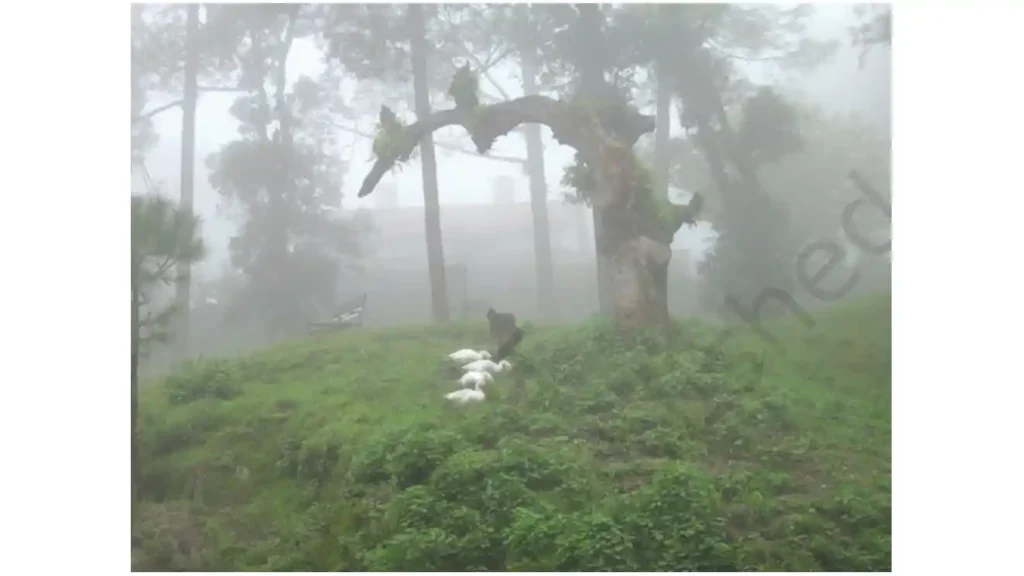
The monsoons are a time of great fun and even a few adventures: playing in
the rain and getting wet, wading through knee-deep water on your way to school, water flooding the house or the classroom, powercuts and so on. Write a paragraph describing an incident that occurred during the rains which you can never forget.
A Rainy Day
One summer day, it rained so much that the streets were full of water. We were excited and decided to walk to school in knee-deep water. As we ran a strong wind blew my cap away. It flew up and got stuck in a tree. We laughed and ran after it. Suddenly there was a loud thunder sound that scared us. We ran to school, all wet. But when we got there we saw the school was closed because of the heavy rain. We had to walk back home but it was a fun day I will always remember.
Write a poem of your own about the season of spring when trees are in full bloom.
Springtime Magic
The sun is warm, the sky is blue,
The trees have leaves so fresh and new.
Flowers bloom and birds sing loud,
Butterflies dance above the ground.
The air is sweet, the world is bright,
Spring brings joy and pure delight!
C. Additional questions and answers
Multiple choice questions & answers (MCQs)
Unit – I
1. What happens to the birds when the monsoon mist comes?
(a) They sing louder
(b) They fly away
(c) They fall silent
(d) They dance in the rain
Ans: (c) They fall silent
2. What season is being described in the diary?
(a) Summer
(b) Winter
(c) Monsoon
(d) Spring
Ans: (c) Monsoon
3. What does the mist give to people?
(a) Happiness
(b) A loud noise
(c) Fear
(d) Privacy
Ans: (d) Privacy
4. What kind of rain does the writer describe on June 25?
(a) Cold and dry
(b) Cold and snowy
(c) Warm and humid
(d) Hot and windy
Ans: (c) Warm and humid
5. Who asked the writer to describe the hill station?
(a) A teacher
(b) A schoolboy
(c) A postman
(d) A shopkeeper
Ans: (b) A schoolboy
6. Where was the writer walking to?
(a) The market
(b) The bank and post office
(c) The school
(d) His friend’s house
Ans: (b) The bank and post office
7. What plant appears when the monsoon rain starts?
(a) Cobra lily
(b) Rose
(c) Sunflower
(d) Mango tree
Ans: (a) Cobra lily
8. What kind of birds chased the minivets away?
(a) Parrots
(b) Pigeons
(c) Drongos
(d) Sparrows
Ans: (c) Drongos
9. What seasonal visitor did the writer mention first?
(a) A monkey
(b) A leopard
(c) A deer
(d) A snake
Ans: (b) A leopard
10. What kind of bird moves up the tree trunk looking for insects?
(a) A sparrow
(b) A drongo
(c) A tree creeper
(d) A parrot
Ans: (c) A tree creeper
11. What color are male scarlet minivets?
(a) Yellow
(b) Blue
(c) Red
(d) Green
Ans: (c) Red
12. What small creature appeared in large numbers?
(a) Butterflies
(b) Leeches
(c) Frogs
(d) Bees
Ans: (b) Leeches
Unit – II
1. What was missing from the night’s rainfall?
(a) Water
(b) Thunder and storm
(c) Wind
(d) Clouds
Ans: (b) Thunder and storm
2. When did the rain stop?
(a) August 2
(b) August 3
(c) June 24
(d) July 15
Ans: (b) August 3
3. What is the woman doing in the scene?
(a) Collecting flowers
(b) Walking down the hill
(c) Chopping up sticks
(d) Feeding cows
Ans: (c) Chopping up sticks
4. Which of the following flowers are not mentioned in the diary?
(a) Begonias
(b) Orchids
(c) Daisies
(d) Dahlias
Ans: (c) Daisies
5. How long has it been since the sun was last seen?
(a) 2-3 days
(b) 5-6 days
(c) 8-9 days
(d) 10-12 days
Ans: (c) 8-9 days
6. How does the author describe everything around him?
(a) Dry and dusty
(b) Damp and soggy
(c) Warm and fresh
(d) Bright and colorful
Ans: (b) Damp and soggy
7. Where do wild dahlias grow?
(a) In gardens
(b) In flower pots
(c) In rocky crevices
(d) On riverbanks
Ans: (c) In rocky crevices
8. When did the snowfall start?
(a) August 31
(b) October 3
(c) September 15
(d) November 1
Ans: (b) October 3
9. What color do the sky and hills turn after the hailstorm?
(a) Dark blue
(b) Golden
(c) Red
(d) Green
Ans: (b) Golden
10. What looks scary to the writer?
(a) The rain
(b) The trees
(c) The mist
(d) The wind
Ans: (b) The trees
11. What does the mist do to the house?
(a) Covers it with snow
(b) Wraps it in darkness
(c) Makes it disappear
(d) Turns it into ice
Ans: (b) Wraps it in darkness
12. How do the trees look because of the rain?
(a) Green and fresh
(b) Bright and colorful
(c) Grey and lonely
(d) Covered in flowers
Ans: (c) Grey and lonely
13. What sound does the rain make on the windows?
(a) Cracking sound
(b) Tapping sound
(c) No sound at all
(d) Freezing sound
Ans: (b) Tapping sound
14. When did the winter season end?
(a) Early February
(b) Late March
(c) Mid-April
(d) Early January
Ans: (b) Late March
15. What covered Mussoorie before the hailstorm?
(a) A rainbow
(b) A bright sun
(c) A very dark cloud
(d) A thick mist
Ans: (c) A very dark cloud
Fill in the blanks
1. The writer describes the minivets as looking like bright ____________. (Jewels)
2. The leopard lifted a dog from near the ________________. (Servants’ quarters)
6. ____________ held the house in a dark caress. (The mist)
7. The writer received a ___________ in the mail. (Cheque)
8. In late March, a huge black cloud brought a storm of _____________. (Hailstones)
9. _____________ scared away the leopard by shouting loudly. (Bijju’s mother)
10. The rain _________ on the corrugated tin roof all night. (Drummed)
11. The steady sound of rain helps the writer to ________ at night. (Read)
13. The writer saw a ___________ forming after the hailstorm. (Rainbow)
14. The hills have many flowers like _________, ________, ________ and ___________ during the monsoon. (balsam, dahlias, begonias, and orchids)
True or false
1. The trees remain yellow throughout the year. (False)
2. The grandmother believes that shrews bring good luck. (True)
3. The rain in January is warm and pleasant. (False)
4. A rainfall appears after a hailstorm in March. (False)
5. The writer hears Bijju but cannot see him through the mist. (True)
6. The summer enjoys reading while listening to the rain. (False)
7. The writer never sees birds in the monsoon. (False)
8. The sound of rain disturbs the writer’s sleep. (False)
9. The rain is always cold in Mussoorie. (False)
10. The hailstorm lasted for 30 minutes. (True)
Match the following
| Column A | Column B |
| (i) Rain stop | a) The writers friend |
| (ii) Winter end | b) When Cobra lily seeds turn red |
| (iii) Winter rains come | c) October 3 |
| (iv) Monsoon end | d) Late monsoon flowers |
| (v) Rain starting | e) Late March |
| (vi) Bijju | f) June 24 |
| (vii) Begonias | g) August 3 |
Ans:
| Column A | Column B |
| (i) Rain stop | g) August 3 |
| (ii) Winter end | e) Late March |
| (iii) Winter rains come | c) October 3 |
| (iv) Monsoon end | b) When Cobra lily seeds turn red colour |
| (v) Rain starting | f) June 24 |
| (vi) Bijju | a) The writers friend |
| (vii) Begonias | d) Late monsoon flowers |
Short-type questions & answers
Unit – I
1. What does the diary talk about?
Ans: The diary tells about the weather changes during the rainy season. It describes the rain, green hills, birds, animals, trees, and the way people live during this time. It also shows the changes in nature as one season ends and another begins.
2. Which birds are mentioned in the story?
Ans: In A Short Monsoon Diary, the writer talks about many birds. Some of them are the bright red minivet, the black drongo, the whistling thrush that sings during the rain, and the common crow. These birds help show the beauty of nature during the rainy season.
3. Why was Bijju’s mother scared?
Ans: Bijju’s mother was scared because a leopard came near their home and tried to attack one of their cows in the evening. She saw the leopard and became frightened. She quickly ran toward it, shouting loudly to scare it away. The leopard got scared and ran back into the forest.
4. How did the writer describe the monsoon?
Ans: In his diary, the writer says that the monsoon brings a lot of rain, thick mist, and calmness. The rain makes the hills look fresh and magical. Everything around seems wet, quiet, and peaceful.
Unit – II
1. How did the writer describe the scenery outside after the monsoon rains ended?
Ans: After the rain stopped, the writer looked outside and saw a clear sky. The sun finally came out after many days, and birds started singing again. It was a bright and beautiful day after many days of heavy rain.
2. What are some of the flowers mentioned in the story that grow in the hills?
Ans: In A Short Monsoon Diary, the writer talks about many beautiful flowers that grow in the hills. Some of these flowers include wild balsam, which has bright colors; dahlias with their large colorful petals; begonias; ground orchids; and lady’s slipper orchids, which look like little slippers. These flowers make the hills even more beautiful during the monsoon season.
3. Why do ferns change color after the monsoon?
Ans: During the monsoon, ferns are green, fresh, and healthy because they receive lots of rain, but after the monsoon ends, when there is less rain, the ferns begin to dry up and turn yellow.
4. Why do trees change color when winter begins?
Ans: In winter, trees lose their green leaves and turn gray because of the cold weather and fog. They don’t grow new leaves until the weather gets warmer again in spring.
5. When does winter end in Mussoorie, and what does it look like after winter?
Ans: Winter in Mussoorie ends in late March. After that, the sky becomes clear, the sun shines brightly, and sometimes a rainbow appears. The hills look fresh and beautiful again, with flowers starting to bloom.
Long-type questions and answers
1. When did the leopard appear in the story, and what made it run back into the jungle?
Ans: The leopard appeared after the summer rains started. The heavy rain made many wild animals, like lions and snakes, come out of their hiding places. One day, the leopard came near the school and took a dog from the area near the servants’ rooms. Later, it attacked one of Bijju’s cows because it was hungry. But Bijju’s mother saw the leopard and ran toward it, shouting loudly. The leopard got scared and ran back into the jungle. This shows that the summer rains can bring wild animals closer to where people live.
2. Why is the cobra lily important in the story, and how does it show the end of the monsoon season?
Ans: The cobra lily is important in the story because it is a natural sign that the monsoon season is almost over. Before the monsoon ends, the seeds of the cobra lily turn red. The plant begins to grow at the start of the rainy season. Ruskin Bond, the author notices these changes in nature and understands that the seasons are changing. People who live in the hills, like him, use this plant to know that the rain is ending and a new season is beginning.
3. What lesson does Ruskin Bond want readers to learn from “A Short Monsoon Diary”?
Ans: “A Short Monsoon Diary” teaches us to appreciate the little things in life and the beauty of nature. In the book, the author describes birds, animals, flowers, rain, and mist, showing the changes in nature through the seasons. He also shares his feelings of loneliness and happiness at different times of the year. Through his diary, Ruskin Bond wants us to understand that every season has its own beauty, whether it’s the rainy summer, the cold winter, or the warm spring. The book carries an important message about simple things bringing happiness, like watching raindrops, hearing birds sing, or seeing flowers bloom. It reminds us to slow down and enjoy nature, rather than speeding through life all the time.
D. Grammar practice with answers
Put the verbs in the brackets into their proper forms.
(i) The sun (shine) brightly when we (go) to the park.
Ans: The sun was shining brightly when we went to the park.
(ii) The birds (sing) as the sun (rise).
Ans: The birds were singing as the sun was rising.
(iii) They (play) football when it (start) to rain.
Ans: They were playing football when it started to rain.
(iv) She (write) a letter when her pen (break).
Ans: She was writing a letter when her pen broke.
(v) We (watch) a movie when my dad (come) home.
Ans: We were watching a movie when my dad came home.
(vi) They (play) football when it (start) to rain.
Ans: They were playing football when it started to rain.
(vii) We (walk) home when we (see) a rainbow.
Ans: We were walking home when we saw a rainbow.
(viii) I (draw) a picture while my brother (paint) his favourite car.
Ans: I was drawing a picture while my brother was painting his favourite car.
Related Links
- CBSE 8 Maths Chapter 2 Linear Equations in One Variable Solutions
- CBSE 8 Maths Chapter 1 Rational Numbers Solutions
- CBSE 8 English Authors Name
- Ancient Education System of India Solutions
- Jalebis Solutions
- The fight Solutions
- Princess September Solutions
- The treasure within Solutions
- The Selfish Giant Solutions
- Children at work Solutions